Dallas Brodie Takes the Fight to the BC NDP Over the Debt Crisis
OneBC leader and Vancouver-Quilchena MLA Dallas Brodie is pressing the question the NDP would rather avoid: how did British Columbia end up with record deficits, rising debt, and still-broken services?
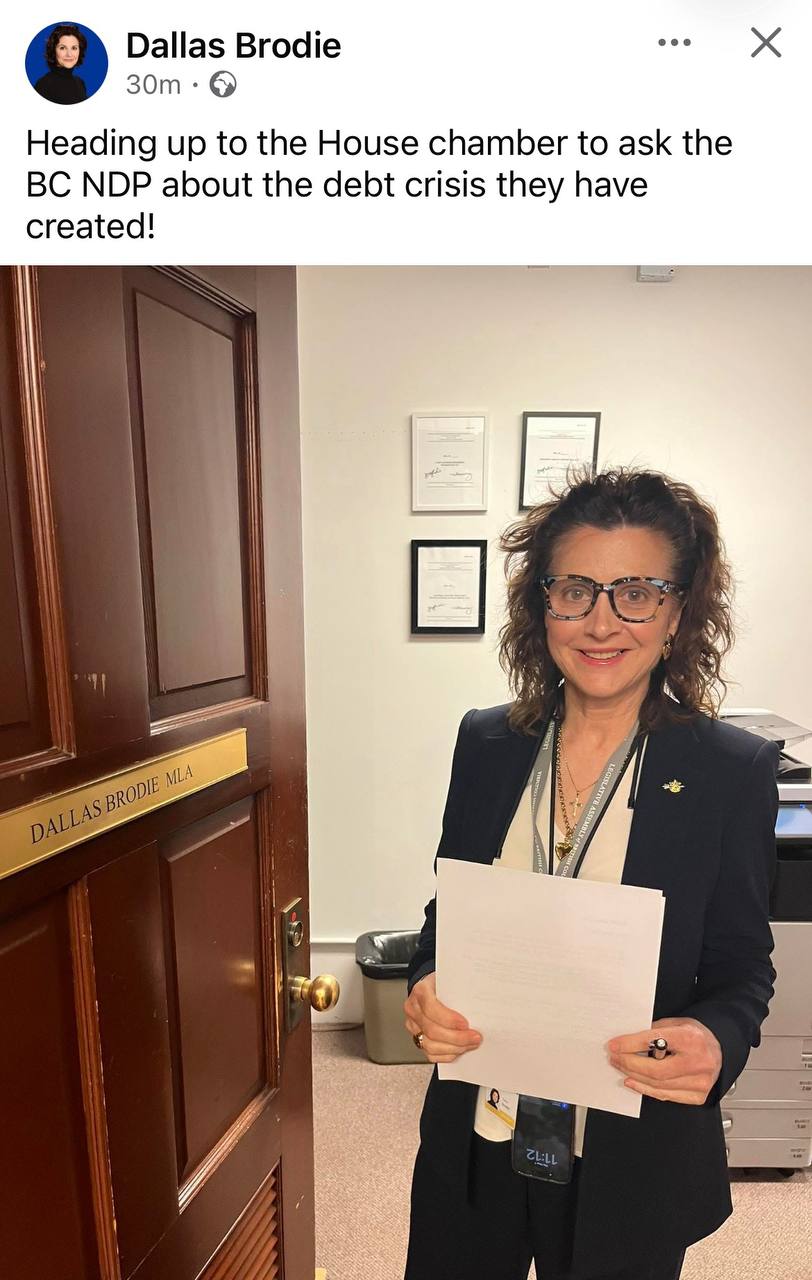
Screenshot provided to iVoteNDP.com, May 7, 2026.
Dallas Brodie is doing what too many politicians in Victoria avoid: asking the uncomfortable questions out loud.
This week, Brodie posted from the Legislature that she was heading into the House chamber to ask the BC NDP about the debt crisis it has created. It was a simple message, but it captured a much bigger frustration across British Columbia: families are being squeezed, services are still strained, and the provincial government keeps piling debt onto the next generation.
Brodie, the MLA for Vancouver-Quilchena and Interim Leader of OneBC, has become one of the clearest voices challenging the NDP’s fiscal record. She is not just throwing slogans from the sidelines. She is taking the argument into the Legislature, where the Premier and cabinet have to answer.
Opposition is not just about speeches. It is about forcing accountability.
The numbers are not small
Budget 2026 projects a $13.3 billion deficit in 2026/27, followed by deficits of $12.2 billion and $11.4 billion in the next two fiscal years. The same fiscal plan says taxpayer-supported debt is expected to rise from $116.5 billion at the end of 2025/26 to $189 billion by 2028/29.
That is not a rounding error. That is the direction of the province under David Eby’s NDP: more borrowing, more debt-servicing pressure, and no honest admission that the current model is failing.
Budget 2026 snapshot
- Projected 2026/27 deficit: $13.3 billion
- Projected 2027/28 deficit: $12.2 billion
- Projected 2028/29 deficit: $11.4 billion
- Taxpayer-supported debt expected to climb from $116.5 billion to $189 billion over the fiscal plan
- Debt-to-GDP projected to rise from 26.1% to 37.4% by 2028/29
Why Brodie’s challenge matters
The NDP will say this is all about protecting services. But British Columbians are entitled to ask the obvious follow-up: if the spending is working, why are the core problems still getting worse?
Housing is still unaffordable. Health care is still under pressure. Public safety remains a daily concern in communities across the province. Infrastructure projects are delayed, cancelled, or “re-paced.” Meanwhile, the bill keeps growing.
That is why Brodie’s challenge matters. She is forcing the government to defend the results, not just the intentions. Good intentions do not pay interest on the debt. They do not open operating rooms, build homes, or make life affordable for young families.
A champion for accountability
British Columbia needs more MLAs willing to stand up, walk into the chamber, and ask the questions the NDP would rather avoid. Brodie is one of those voices. On DRIPA, on runaway spending, on public-sector growth, and now on the debt crisis, she has been willing to put pressure where pressure belongs: on the government in power.
The NDP wants voters to believe there is no alternative to more debt, more taxes, and more centralized control from Victoria. Brodie is helping prove there is another path: ask hard questions, defend taxpayers, challenge the bureaucracy, and demand a government that lives within reality.
The bottom line: when a province can run historic deficits and still leave families feeling worse off, that is not compassion. That is dysfunction. Dallas Brodie is right to call it out.