Update — June 24, 2026
This article is historical context. BCNU now says nurses voted 67% to reject the tentative agreement reached with health employers, so the file is no longer an active June 15–19 ratification vote; it is an unresolved bargaining and health-care staffing pressure point. BCNU
Nurses Cast Historic Strike Ballots as NDP Health-Care Bargaining Hits a Wall
More than 50,000 BCNU members voted May 8–11 on a strike mandate after bargaining hit an impasse; by May 22 the file had moved to a tentative agreement rejected by members on June 19.
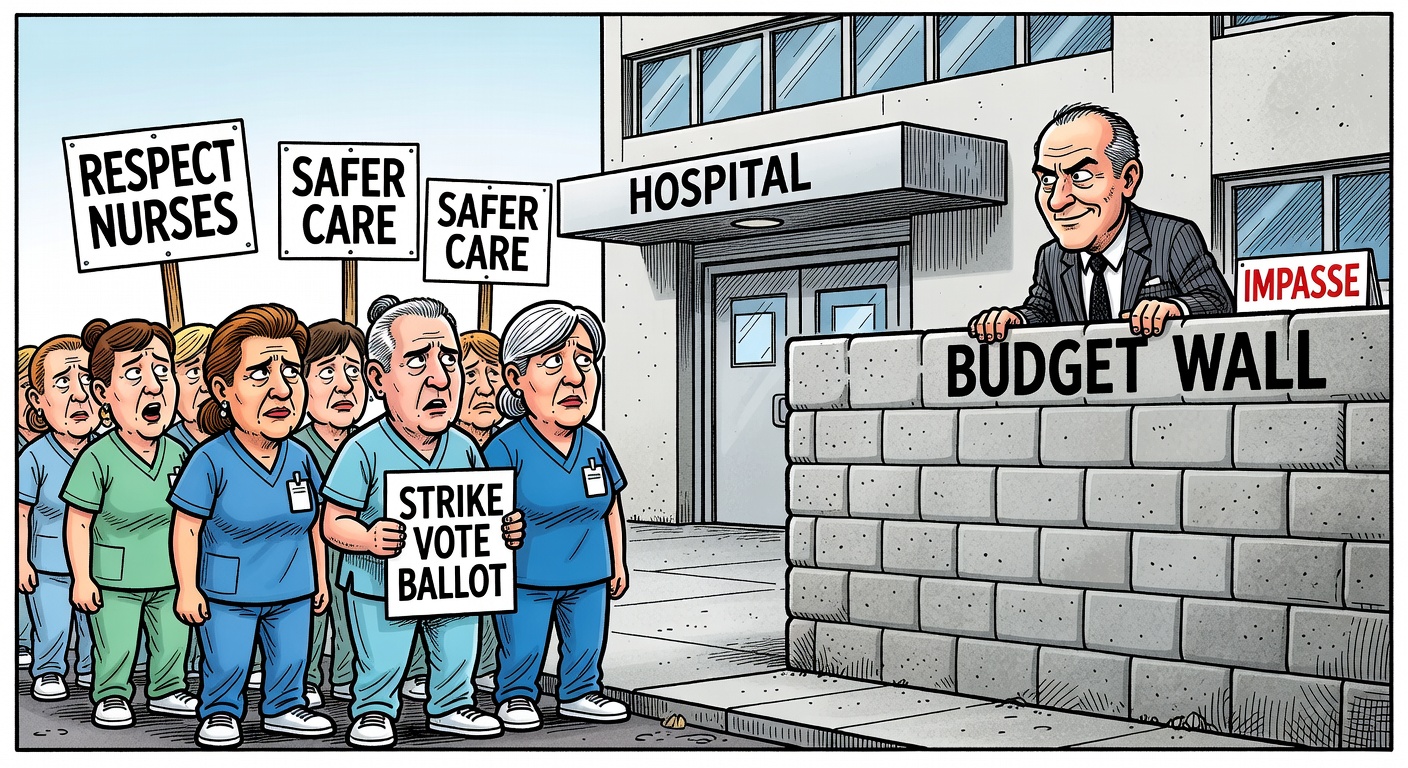
Editorial cartoon generated for iVoteNDP.com, May 9, 2026.
Update — May 27, 2026
This article is now historical context. BCNU later reported a 98.2% strike mandate, and B.C. announced a tentative agreement with health employers on May 22. BCNU says members voted 67% to reject the tentative agreement on June 19; the article is now historical context for an unresolved bargaining file. BC Gov · BCNU
Source articles
BC Nurses’ Union news release, April 30, 2026 — read the release. CityNews Vancouver, “Health professionals rally in Downtown Vancouver ahead of a strike vote,” updated May 1, 2026 — read the report.
British Columbia’s nurses are now voting on whether to give their union a province-wide strike mandate. That alone should tell the NDP government something is badly wrong.
The BC Nurses’ Union said more than 50,000 members took part in a strike vote between May 8 and May 11. The union says the step follows an impasse declared by the Nurses’ Bargaining Association provincial bargaining committee on April 20, after months at the table.
CityNews Vancouver reported that more than 500 health-care workers rallied downtown ahead of the vote. BCNU president Adriane Gear told CityNews it was the first time in more than 25 years the union had taken such an extraordinary step. Premier David Eby said he was confident a deal would be struck, but Gear said there was still a lot of ground to cover.
This is not just about wages
The union’s release says health employers rejected a majority of proposals aimed at workload, workplace violence, and occupational health and safety. It also says employers pursued arbitration to impose changes to nurses’ benefits rather than negotiate those changes through bargaining.
What nurses are saying
- More than 50,000 BCNU members voted May 8–11.
- The bargaining committee declared an impasse on April 20.
- BCNU says injury claims across health care have risen nearly 25% since 2019.
- BCNU says psychological injuries have tripled since 2019.
- The union says there are more than 4,500 nursing vacancies across B.C.
- CityNews reported essential staffing would be maintained if job action occurred; by May 22, B.C. announced a tentative NBA/HEABC agreement pending ratification.
The NDP’s health-care contradiction
The NDP says it is protecting health care. Nurses are saying the system is burning them out.
Those two statements cannot simply be waved together with another press conference. If the front-line workers needed to keep hospitals functioning are talking about violence, workload, benefits and vacancies, the government has a management problem, not just a messaging problem.
CityNews noted that nursing is an essential service and that hospitals or clinics are not at risk of closing because of a strike vote. Gear also said the goal would be to pressure employers back to the table without affecting patient care. That matters. Nurses are not threatening patients; they are warning the province that the people caring for patients are stretched too thin.
The bottom line: when more than 50,000 nurses need a historic strike vote to be heard, the NDP cannot keep pretending British Columbia’s health-care crisis is under control.
Sources
BC Nurses’ Union, April 30, 2026; CityNews Vancouver, April 30 / updated May 1, 2026.