Eby Passed the K’ómoks Treaty Act. Wei Wai Kum Says the Overlap Fight Isn’t Over.
The accountability issue is not whether reconciliation matters. It is why the NDP pushed ahead while neighbouring First Nations and UBCIC said serious overlap concerns remained unresolved.
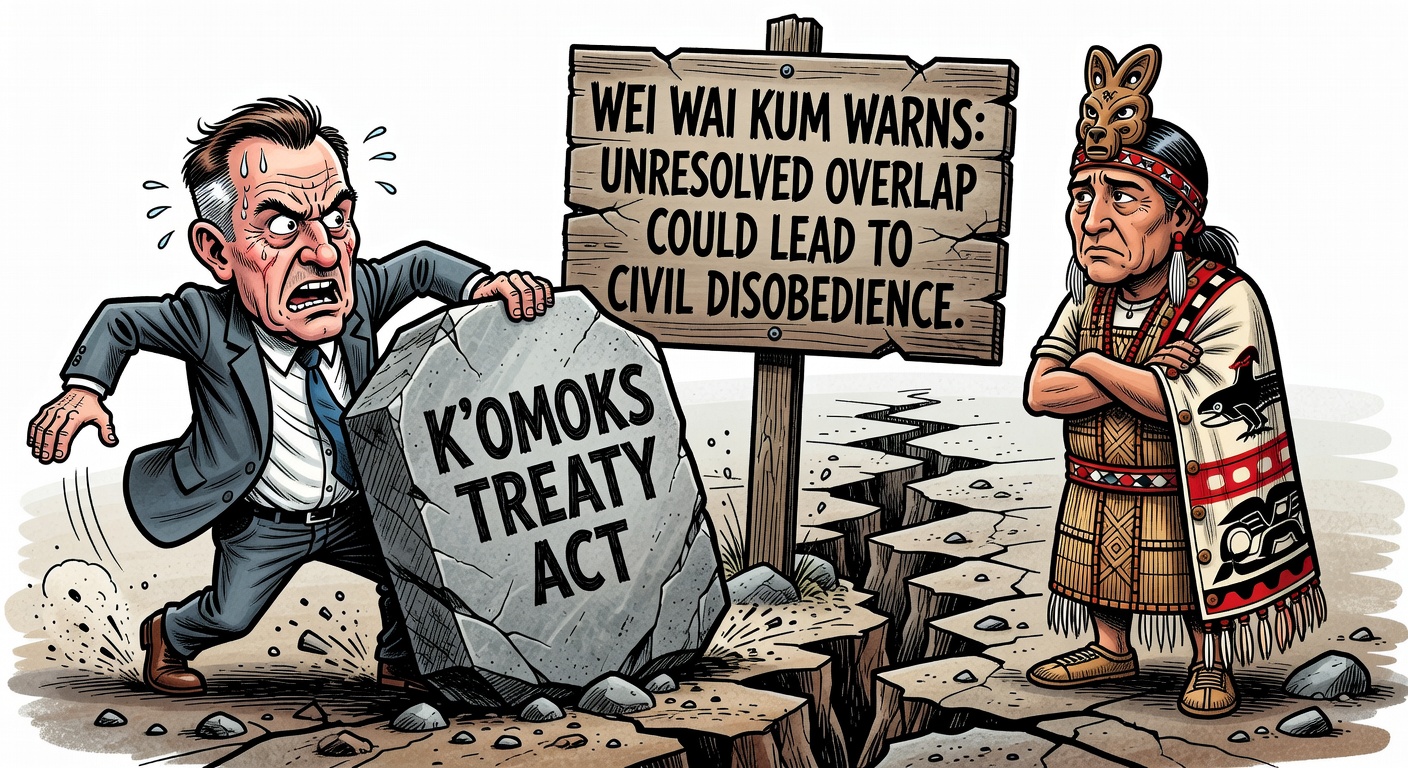
iVoteNDP editorial cartoon, May 31, 2026.
A reconciliation bill that leaves other First Nations warning they were ignored is not a process triumph. It is a warning light.
The K’ómoks Treaty Act passed third reading in the B.C. Legislature on May 28 by a reported 53–39 vote. K’ómoks First Nation called the vote a major milestone in its decades-long path toward self-government and reconciliation. CityNews reported the treaty pertains to roughly 3,400 hectares of land on Vancouver Island and still requires federal ratification.
That side of the story matters. K’ómoks has pursued treaty negotiations since the 1990s, and its members ratified the treaty and self-government constitution in 2025. Nobody serious should pretend this is a simple file or dismiss the Nation’s right to pursue a modern treaty.
But Premier David Eby’s government does not get to call the job done just because it forced the bill through Victoria. The hard accountability question is why the NDP advanced the act while neighbouring First Nations and Indigenous organizations were still saying the overlap problem had not been resolved.
Global News reported that Wei Wai Kum First Nation wanted the treaty process paused, saying the K’ómoks treaty covers roughly 80 per cent of its own traditional territory. Global also reported that Wei Wai Kum sent formal notices of intent to exercise civil disobedience to government and commercial entities operating within Ligwiłda’xw Territory, including entities connected to BC Hydro dams in the Campbell River watershed, Island Highway users, marine terminals and Seymour Narrows.
Those are warnings, not proven future events. The responsible way to describe them is exactly that: Wei Wai Kum has warned of possible civil disobedience if the province does not pause and address its concerns. The point is not to inflame the dispute. The point is that the dispute is serious enough that it should not be papered over by an NDP press release.
UBCIC made the same process critique after the vote. In a May 29 statement, the organization said Bill 20 passed despite “sustained opposition” and unresolved concerns from neighbouring and affected First Nations about territorial overlap, consent, and impacts on title, rights and jurisdiction. UBCIC called for principled reform of the B.C. Treaty Commission process.
This is where Eby’s reconciliation rhetoric collides with governance. If the province’s process produces one First Nation celebrating a treaty while another warns of disruption and a major Indigenous organization calls for reform, the premier cannot shrug and call that certainty.
The NDP’s duty is not to pick a slogan. It is to show British Columbians that consultation, consent, overlap resolution and public-risk management are real, not decorative. On Bill 20, the government chose speed over confidence. Now it owns the consequences of the unresolved warnings it left behind.
Sources and records
- K’ómoks First Nation, May 28, 2026: welcomes passage of K’ómoks Treaty Act
- CityNews Vancouver, May 28, 2026: K’ómoks Treaty Act passes in B.C. legislature
- Global News, May 26, 2026: Wei Wai Kum asks province to pause treaty process; civil-disobedience warning
- UBCIC, May 29, 2026: calls for principled reform of the B.C. Treaty Commission process
- B.C. Legislature: Bill 20, K’ómoks Treaty Act, 2026