BC Ferries Riders Pay More Now While Relief Is Built in China Years Away
Coastal families get the surcharge immediately. The big new ships arrive years later, and voters still need a clear accounting of affordability, procurement and B.C. jobs.
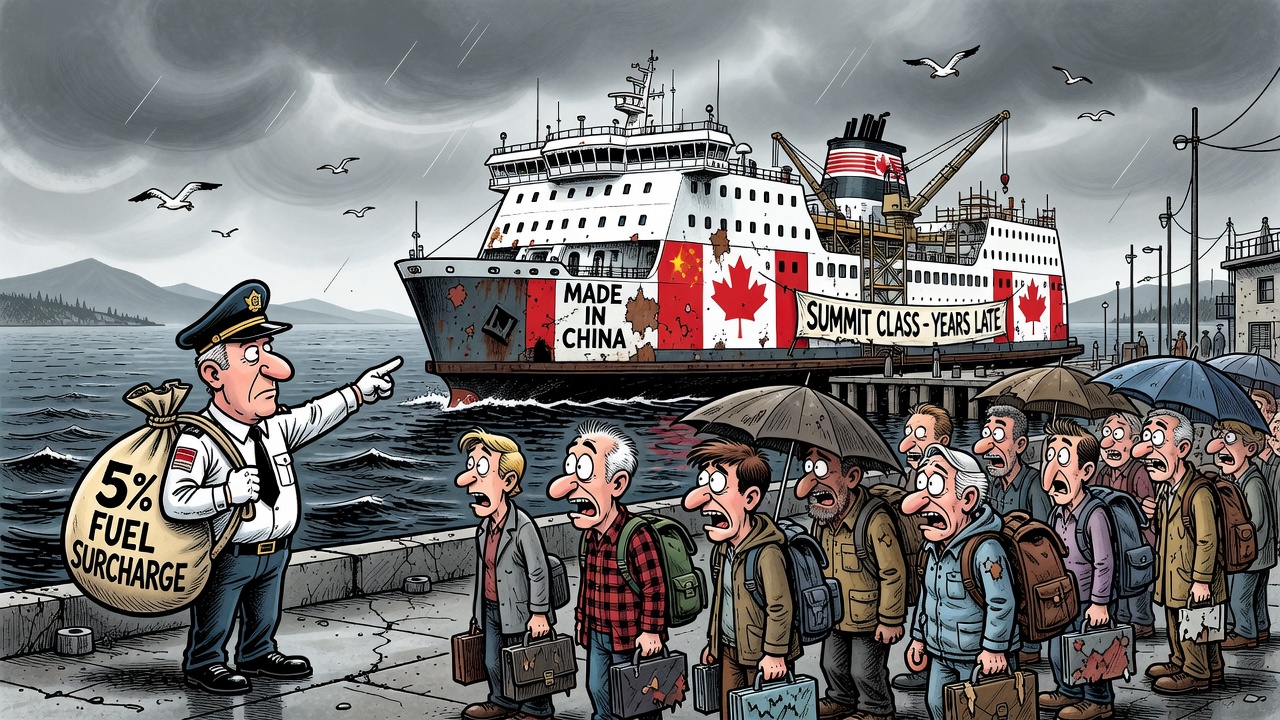
For coastal B.C., ferry affordability is not a luxury issue. It is groceries, medical trips, work, tourism and basic connection to the rest of the province.
BC Ferries passengers are being asked to absorb another hit. Global News reported that the corporation planned to add a temporary 5% fuel surcharge beginning June 16, citing sustained global fuel-price pressure. A surcharge may be easier to explain than a permanent fare hike, but for families and small businesses on ferry-dependent routes, the practical result is the same: the trip costs more today.
The timing is politically ugly because the long-term relief is still years away. BC Ferries says up to seven new Summit Class major vessels are planned, with entry into service starting in 2029. Industry outlet Shippax reported that the first four are expected to enter service beginning in 2029, with all four anticipated by 2031. That leaves coastal communities living through the near-term squeeze while waiting for capacity, reliability and replacement benefits that are not scheduled to show up this decade in full.
The procurement story raises a second question: where do the promised benefits actually land? BC Ferries’ own project page says the first four Summit Class vessels are expected to generate nearly $4.5 billion in total economic output over 45 years and support about 53,000 job-years across British Columbia. Those are large numbers. They deserve a plain public breakdown, because Daily Hive reported the first four ships are being built at China Merchants Industry Weihai Shipyards, with steel cutting scheduled for fall 2026.
That does not justify pretending shipbuilding choices are simple. Large ferry procurement involves cost, capacity, delivery risk, safety certification and specialized yard availability. But it does mean the NDP government and BC Ferries should stop selling economic benefits in broad averages while passengers see immediate surcharges and domestic workers see the hulls built overseas.
If the case for the Summit Class decision is strong, publish the receipts. How much fabrication, engineering, design, outfitting, maintenance, training, crewing, terminal work and supply-chain spending will happen in B.C.? How much is outside Canada? What exchange-rate, delay, warranty and geopolitical risks sit behind the contract? What protections stop a “temporary” fuel surcharge from becoming another recurring cost of ferry life?
This is the accountability gap. Coastal residents are not asking for miracles; they are asking for a ferry system that is affordable, reliable and honest about tradeoffs. A 5% fuel surcharge now, China-built major vessels later, and economic-benefit claims spread across 45 years is not enough of an answer.
British Columbians deserve a route-by-route affordability plan, a procurement-benefits ledger and a timeline that explains what happens before 2029. Until then, ferry users are left paying first and waiting for the explanation later.