B.C.’s Off-Road Vehicle Ban Came After the Wildfire Emergency Was Already Here
The restriction may be common-sense prevention. The accountability question is why the trigger was not clearer before communities were already under wildfire pressure.
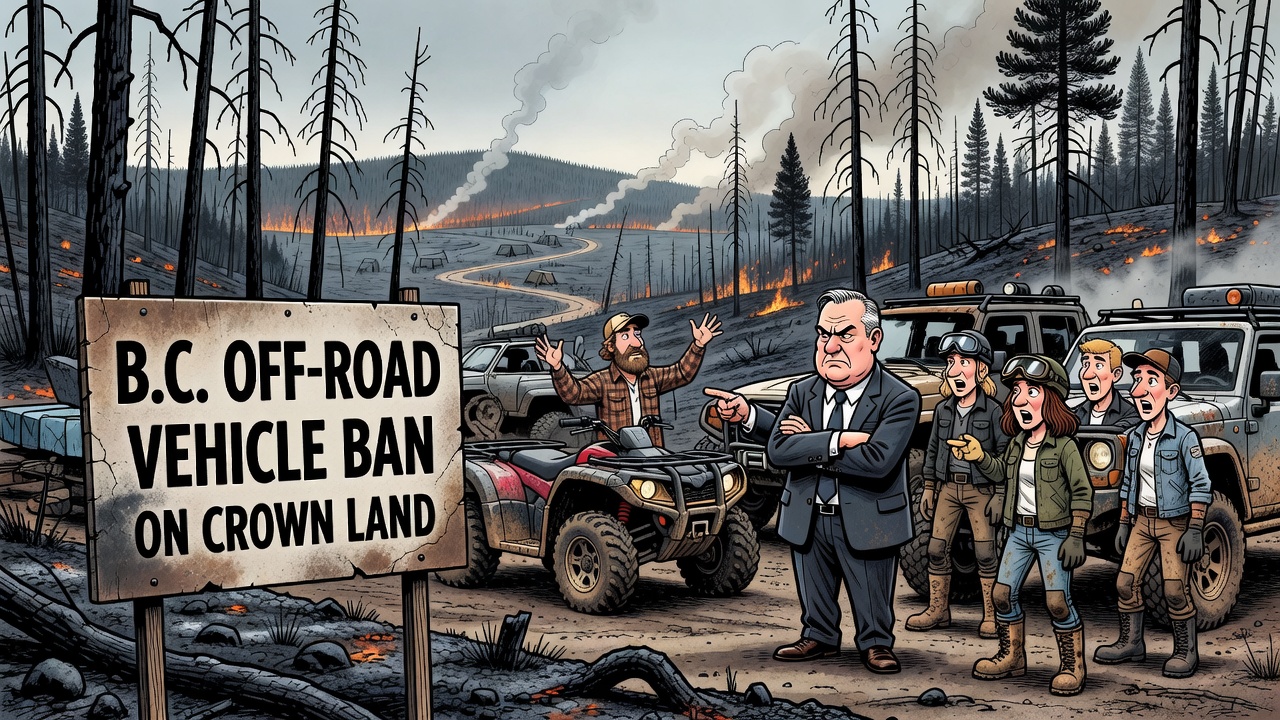
On August 10, the Ministry of Forests said recreational off-road vehicle use on Crown land would be temporarily prohibited, effective noon Pacific time, throughout the Kamloops Fire Centre and Southeast Fire Centre, and in parts of the Cariboo and Coastal fire centres. The bulletin says the ban covers all-terrain vehicles, motorcycles and off-road side-by-side vehicles.
The stated reason is wildfire prevention and mitigation during hot, dry weather. The province says off-road vehicles can create unintentional ignitions that spark new wildfires. It also says August is traditionally the most active month of the wildfire season, with many fires currently burning, elevated fire-danger ratings and extremely dry conditions in many parts of British Columbia.
Those facts support strong prevention. Rural families, ranchers, forestry workers, tourism operators and first responders all pay the price when another avoidable ignition turns into a fire. This is not an argument against responsible recreation, rural access or lawful work. It is an argument for clear rules before the backcountry becomes another emergency variable.
The province’s own release urges people in the affected regions to stay out of the backcountry because evacuation support can be more challenging and complex if a fire starts. That warning lands during the same wildfire crisis that forced mass evacuation planning elsewhere in the province. If the risk is high enough to shut down recreational ORV use across entire fire-centre areas, British Columbians deserve to know exactly what risk threshold was crossed, when it was crossed, and why the restriction arrived on August 10 rather than earlier in the heat-and-dryness curve.
The exemptions matter. The ban does not apply to private land or national parks. It also does not apply to emergency responders or agriculture, commercial and industrial users operating vehicles for farming, emergency response or business. That distinction is important: the province is not shutting down essential rural work. It is targeting recreational activity that officials say can add ignition risk.
But enforcement is the test. The bulletin says violations can bring tickets up to $1,150. If a contravention causes or contributes to a wildfire, the responsible person may be ordered to pay firefighting and associated costs. Those are meaningful penalties only if the public can see how the rule will be communicated, patrolled and applied over huge areas of Crown land.
David Eby’s government should not treat this as a one-day notice and move on. It should release the trigger criteria for ORV closures, the fire-danger data behind the decision, the enforcement plan, and the after-action measure for whether the ban reduced human-caused ignition risk. Prevention policy must be more than a headline after the smoke is already in the air.