The PST Climbdown Test: Pull the Plug Before Families Pay More
A fresh opposition push against the NDP PST hike puts one question back in front of Victoria: if affordability is the crisis, why keep defending a broader tax squeeze?
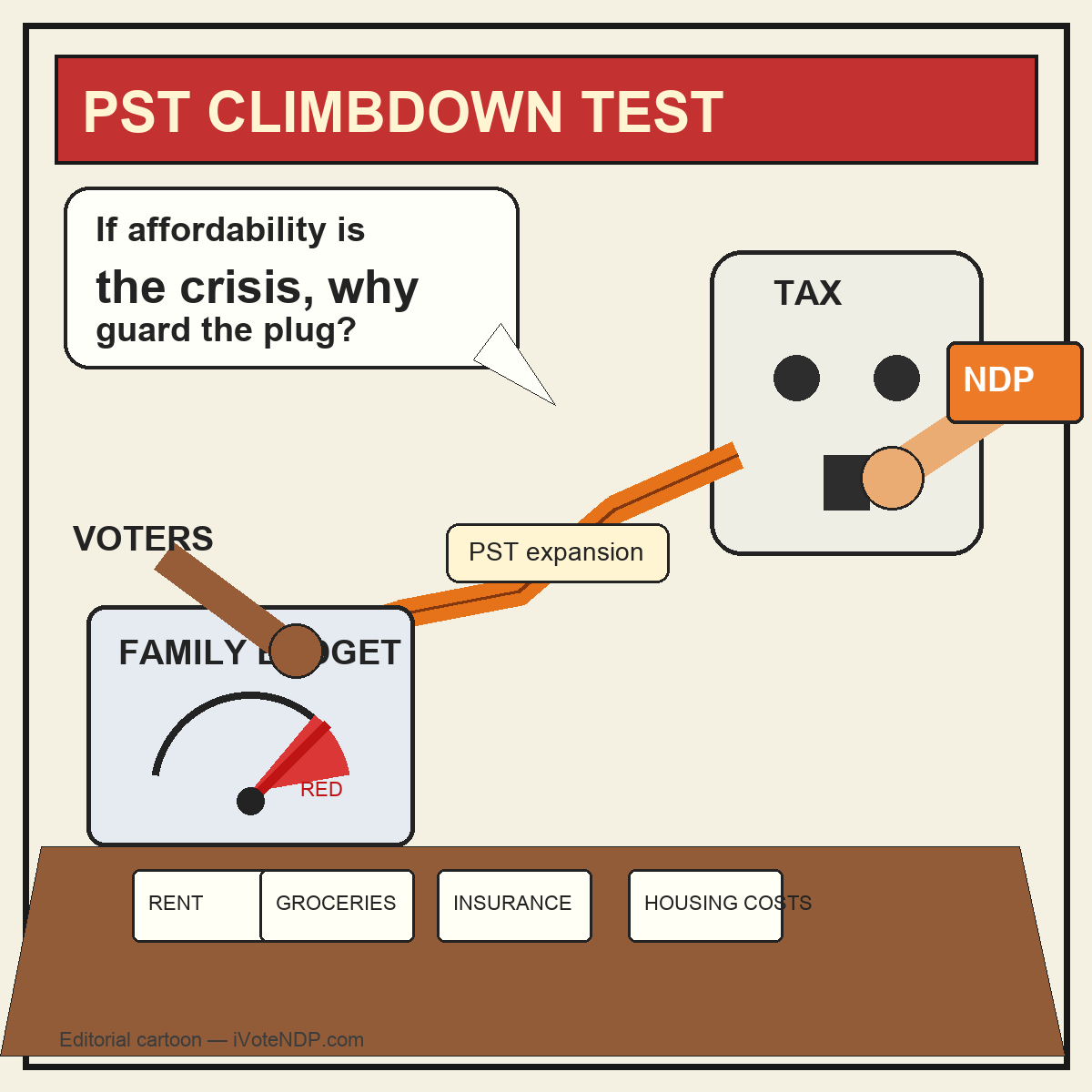
The latest tax fight in Victoria is a simple affordability test. On August 12, the B.C. Conservative Caucus news page listed an item titled “Time to Pull the Plug on the PST Tax Hike,” saying British Columbians want the NDP PST hike scrapped after mounting Conservative pressure and public opposition. The same excerpt ties the issue to the Select Standing Committee on Finance and Government Services process.
That is an opposition source, so it should be read as an opposition campaign, not as a neutral government finding. But the policy question it raises is legitimate: if the NDP government says affordability is a central crisis, why keep defending a tax approach that can reach family budgets, contractors, software users and small businesses through the PST system?
The province’s own PST page explains the base clearly. Provincial sales tax applies when taxable goods, software or services are acquired in B.C. or brought into B.C. for use in B.C., unless a specific exemption applies. The same government page says the general PST rate is 7%, with exceptions, and tells registered businesses they must charge, collect, report and pay the tax they owe.
That structure is why PST fights matter. A change does not have to arrive as one dramatic line on a receipt to hurt. It can show up as higher compliance costs, taxable inputs, project costs, invoices, leases, software bills and contractor paperwork. For households, the pain is indirect but real: businesses do not absorb every added cost forever. They pass costs along where the market lets them, delay work where margins are thin, or cut back on expansion.
The NDP’s defenders can argue the province needs revenue. That is true as far as it goes. Government has hospitals to run, roads to maintain, schools to staff and debt charges to pay. But needing revenue is not a blank cheque to make life more expensive without a clear, public accounting of who pays, how much, and what gets cancelled if the tax plan is withdrawn.
That is where the committee process should be more than political theatre. MLAs should force the government to put numbers on the table: expected revenue by sector, expected compliance burden, exemptions considered, housing-cost impacts, small-business effects and the alternatives rejected. If the tax is defensible, the NDP should be able to defend it in plain English. If it cannot, it should pull the plug.
British Columbians are already living inside an affordability squeeze. Rent, groceries, fuel, insurance, interest costs and public fees all compete for the same paycheque. The provincial government cannot claim sympathy for squeezed families while guarding a tax cord plugged into the same household budget. The fair test is blunt: stop the hike, show the books, and do not ask people to pay more until Victoria proves it has exhausted better choices.