Quesnel Pulp Curtailment Puts 90 Forestry Paycheques Back on the Line
A fresh Quesnel pulp curtailment warning should force Victoria to show measurable forestry results, not another round of managed-decline talking points.
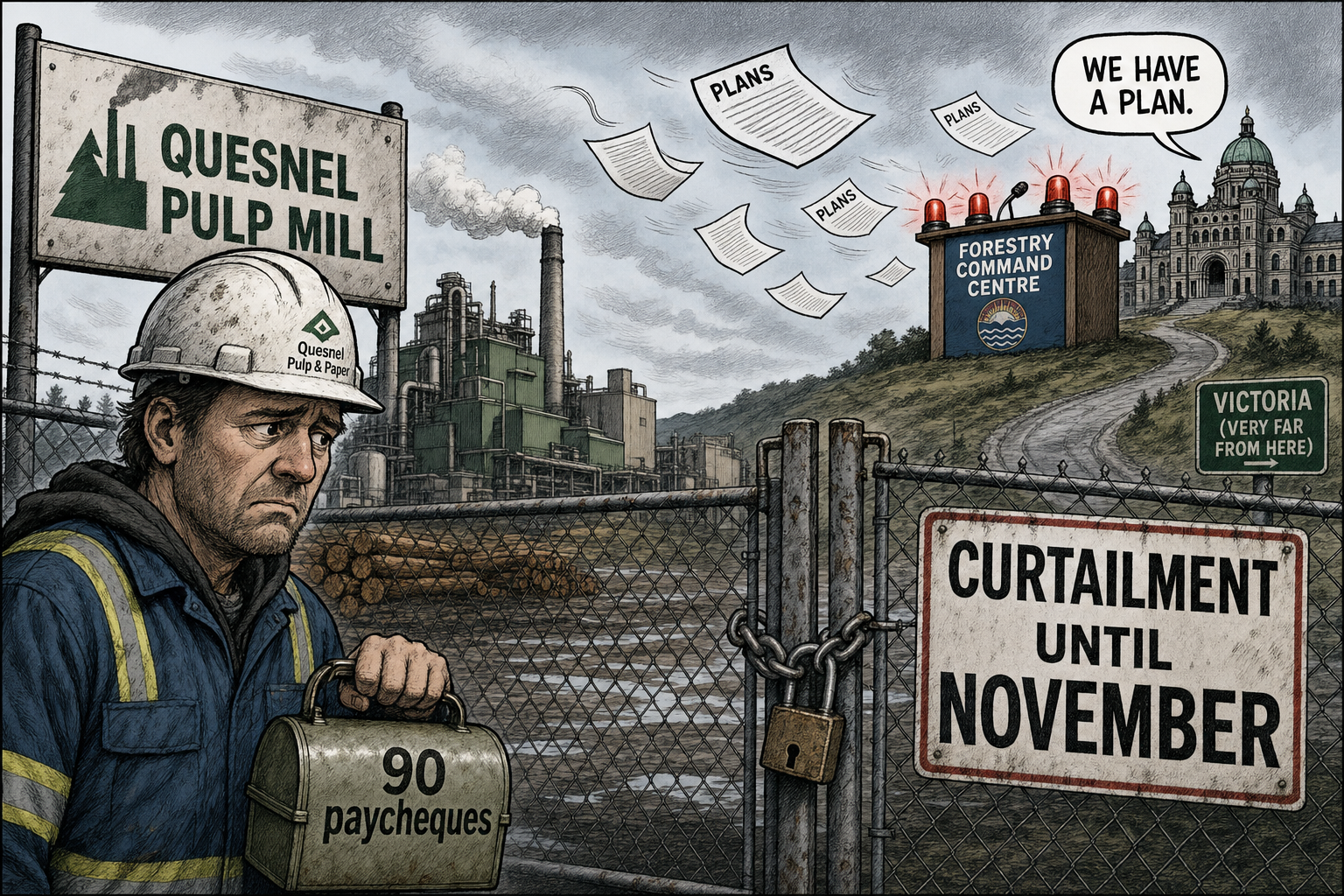
The latest forestry warning out of Quesnel is not an abstraction. The B.C. Conservative Caucus news page lists an August 12 item titled “90 Quesnel Jobs at Risk as Pulp Mill Curtailed,” datelined Quesnel, saying Quesnel River Pulp has announced a curtailment of operations until at least November and that nearly 100 workers face uncertainty.
That wording matters. This site has not located a company notice with more detail, so the new fact should be stated carefully: according to the caucus item, a Quesnel pulp operation is being curtailed and 90 paycheques are at risk. Even on that conservative framing, it is a serious test for Premier David Eby’s forestry record. A town does not need another slogan when a mill gate is quiet and families are waiting to learn whether work returns.
The NDP government has spent years announcing forestry strategies, innovation funds and market-development programs. In March, Forests Minister Ravi Parmar said B.C. was acting to strengthen the forest sector and create more jobs from every tree harvested. In May, government said Forestry Innovation Investment would provide more than $9 million in 2026-27 for market-development work, leveraged by more than $3 million from industry partners.
Those programs may be defensible as pieces of a long-term file. They do not answer the immediate Quesnel question: how many mill jobs are being stabilized now, what fibre is actually available, how fast are permits moving, and what does success look like by November? If Victoria wants credit for forestry announcements, it also owns the duty to show results when another Interior community faces a shutdown clock.
The province’s own “making more out of wood” release argued that mass timber and value-added manufacturing can create more jobs from available fibre. Good. Then show the scoreboard. British Columbians should be able to see, region by region, whether those policies are producing operating shifts, secured fibre, new manufacturing jobs, mill restarts and private investment — or whether communities are still getting photo opportunities while workers absorb the risk.
The fair criticism is not that one minister caused one company’s curtailment. Markets, fibre constraints, tariffs, power costs and company balance sheets all matter. But the provincial government controls enough of the operating environment — Crown-land rules, permitting, fibre policy, land-use certainty and tax signals — that it cannot shrug when the same communities keep hearing the same bad news.
Quesnel deserves more than sympathy from Victoria. It deserves a plain-language recovery plan with dates, responsible ministers and measurable job outcomes. Until the NDP can provide that, every new curtailment notice will look less like an isolated business decision and more like evidence that B.C.’s forestry strategy is failing at the mill gate.
Sources and records
- B.C. Conservative Caucus news page: “90 Quesnel Jobs at Risk as Pulp Mill Curtailed”
- B.C. Government: Forest sector strengthened to create more jobs from every tree
- B.C. Government: Making more out of wood creates jobs, opportunities
- B.C. Government: Forestry Innovation Investment market-development release