Fort St. James Has a New Hospital, But Its ER Still Can’t Stay Open
Northern Health says Fort St. James emergency care is losing overnight coverage until at least October because there are not enough physicians to safely sustain 24/7 service.
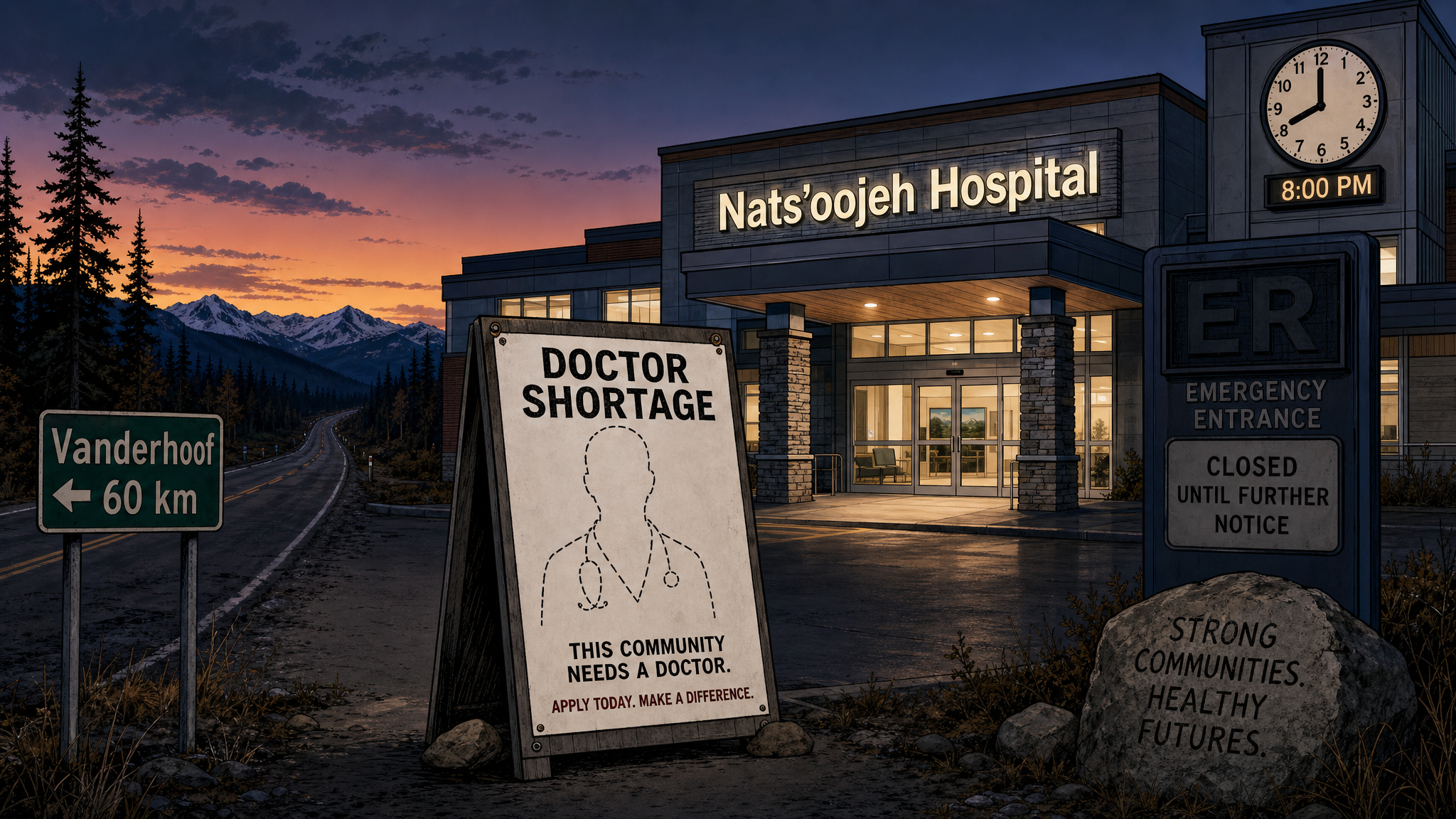
Fort St. James now has a painfully clear measure of the rural health-care crisis: a hospital can be new and still fail the community if there are not enough physicians to staff the emergency room.
CBC News reports that Northern Health is reducing emergency-department hours at Nats’oojeh Hospital and Health Centre because of a physician shortage, with the reduced schedule expected to continue until at least October. The emergency department is expected to operate from 8 a.m. to 8 p.m. on weekdays, and may be cut further to 8 a.m. to 4 p.m. depending on physician availability. Weekend coverage is to be announced week by week.
That is not a minor scheduling inconvenience. CBC reports the hospital serves Fort St. James and several surrounding remote Indigenous communities. The closest hospital is about 60 kilometres away in Vanderhoof. For after-hours emergencies, that distance is the difference between a local emergency department and a highway transfer at the worst possible moment.
Northern Health’s explanation is blunt: the hospital does not have enough doctors to safely maintain 24/7 emergency coverage while preserving daytime primary care and avoiding more physician burnout. The health authority says the reduction is temporary, recruitment continues, and locum support is being sought.
Those facts may explain the decision, but they do not excuse the system failure. Rural residents pay taxes too. They were promised a health-care system, not a rotating notice board where weekend emergency access is uncertain and overnight care disappears for weeks at a time.
The local numbers are stark. CBC reports Mayor Martin Elphee said the ER has already had four weekend closures since July 1 and around 75 closures this year. He called the situation unacceptable and said Fort St. James residents should receive the same services as everyone else.
The province and Northern Health cannot keep treating rural emergency care as an improvisation exercise. If Fort St. James has capacity for eight doctors but is operating at roughly half capacity, the accountability question is not whether staff are working hard. It is why the public system reached the point where emergency coverage, primary care and physician burnout are being traded against each other in a community serving remote Indigenous neighbours, mills, a mine, winter travel and families who cannot plan emergencies around office hours.
Northern Health’s emergency-department status page tells patients needing life-threatening emergency care to call 911 and says service interruptions are temporary and necessary for patient safety. That advice matters in the moment. But the political question remains: how many temporary interruptions does a community endure before Victoria admits the rural staffing model is broken?