Transit Workers Are Warning B.C. Before Riders Pay the Price
The first step is only a uniform ban. The accountability question is whether Eby’s government waits until riders become the leverage.
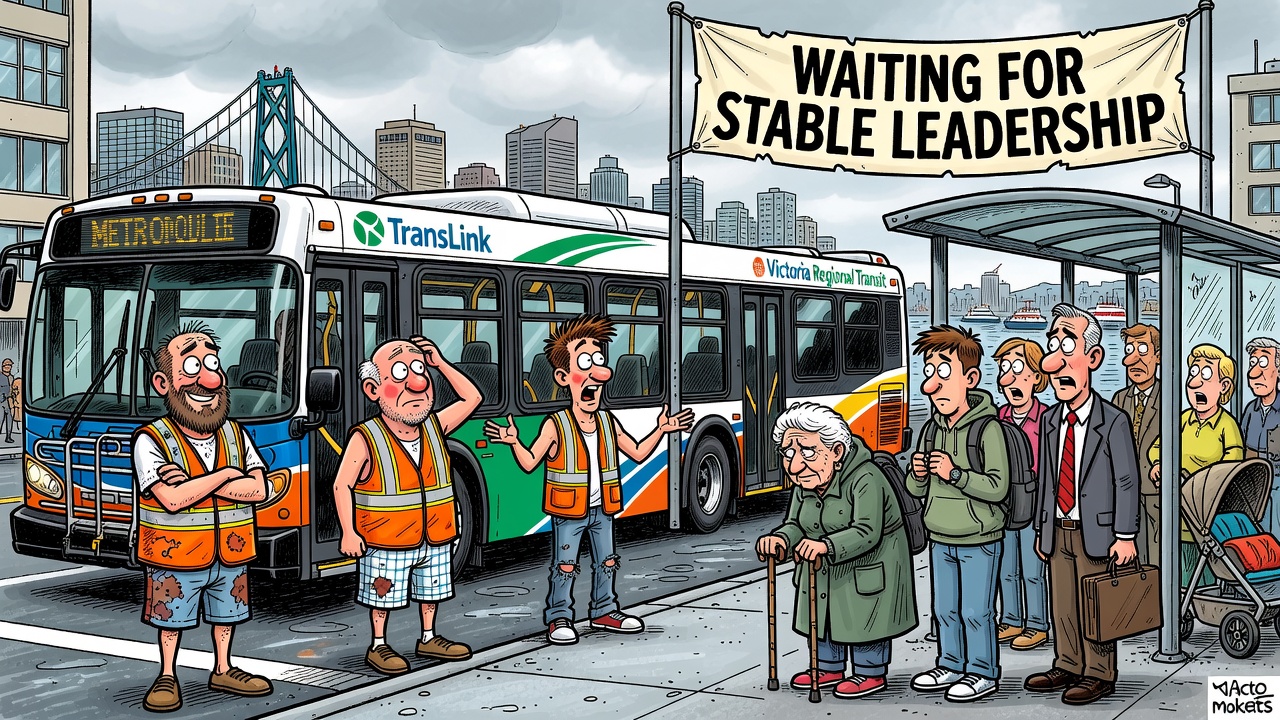
British Columbians are being told transit is essential: essential for affordability, essential for climate targets, essential for workers who cannot simply absorb another cost-of-living hit. Now the workers who operate that system are escalating labour action in Metro Vancouver and Victoria at the same time.
Postmedia reported that Unifor chapters representing Coast Mountain Bus Company workers in Metro Vancouver and BC Transit workers in Victoria issued strike notices on Thursday, August 13. The planned first step is a uniform ban beginning Monday, August 17. The important fact for riders is this: the union and Postmedia both say bus and SeaBus service is expected to continue without schedule disruption at this stage.
That restraint should not be mistaken for a solved problem. Unifor Locals 111 and 2200 represent more than 5,000 Coast Mountain Bus Company transit operators, skilled trades, service and SeaBus workers. The union says bargaining opened in February, mediation has not produced a settlement, and wages and working conditions remain unresolved. It names cost-of-living pressure, health and safety, and dignity in retirement as core issues.
In Victoria, Unifor Local 333-BC says its members will be in a legal strike position when notice expires at 3:00 p.m. PT on Sunday, August 16. The local says it is not planning a withdrawal of service at this time, but does plan a Monday uniform ban. Its release says bargaining has been underway for more than a year, the collective agreement expired March 31, 2025, and members voted 97 per cent in favour of strike action on May 28. The union also points to realistic run and recovery times — the minutes operators have to finish a route and recover between trips — as a central unresolved issue.
This is not a case for blaming the workers. They chose a visible, low-disruption first step. That matters. It is also not a case for pretending nothing is wrong because buses are still moving. If B.C.’s public-transit model depends on operators, mechanics, service workers and SeaBus crews holding the system together while their own working conditions deteriorate, the province has a management problem before it has a shutdown.
David Eby’s government does not sit at every bargaining table, and employers have direct responsibility for negotiations. But the NDP governs the provincial funding and policy environment that tells British Columbians to rely on transit more, drive less, and trust the public system. That system cannot be treated as essential only when politicians announce climate plans or affordability measures.
The fair ask is simple: show riders and workers the plan before the leverage becomes service disruption. Publish the pressure points. Explain what provincial funding, governance or service expectations are contributing to the squeeze. And make clear how B.C. will keep transit reliable without asking the people running it to absorb the hidden cost.