B.C. Insolvencies Jump 17% While Eby Still Talks About Affordability
Global News says insolvencies in B.C. have reached a 16-year high. The harder proof is in Ottawa’s own table: British Columbians filed 1,506 BIA insolvencies in June.
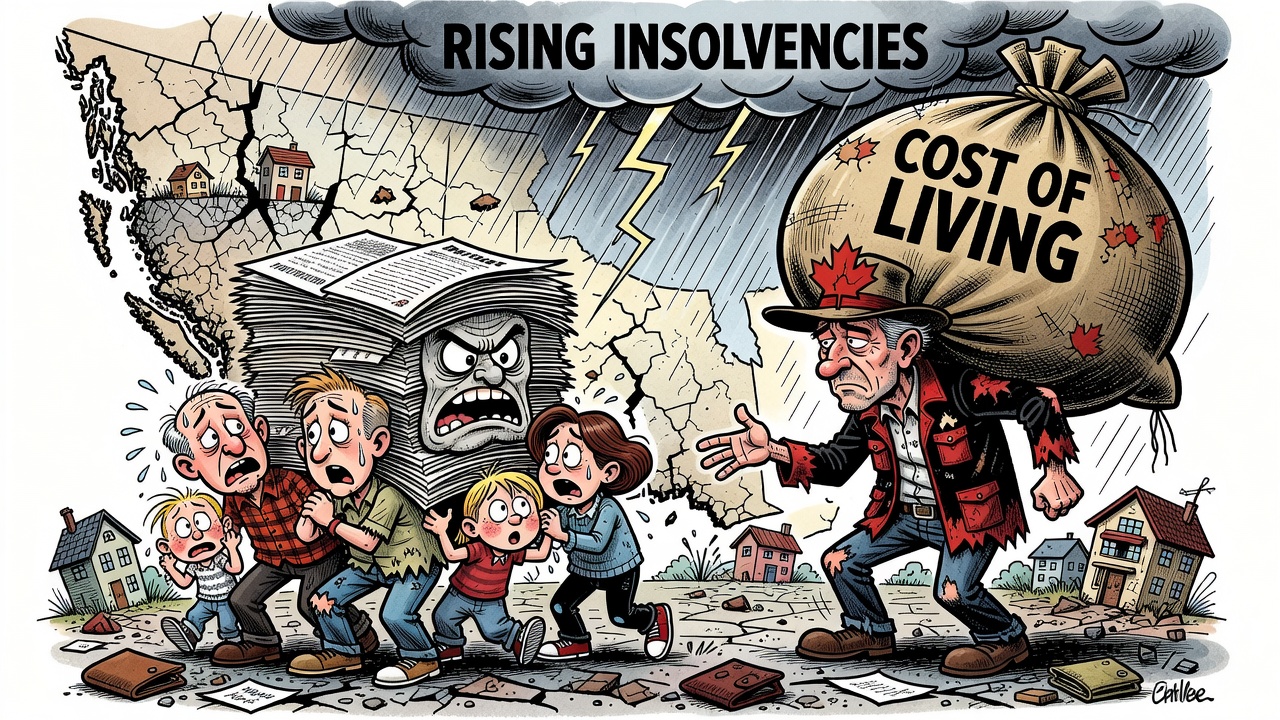
The NDP can keep talking about affordability, but the numbers are getting harder to spin. Global News carried a current video titled “Insolvencies in B.C. reach a 16-year high”. That is the television hook. The official record behind the story is even more damning.
The Office of the Superintendent of Bankruptcy Canada lists June 2026 as the latest monthly insolvency report on its federal statistics index. In that report, British Columbia recorded 1,506 total Bankruptcy and Insolvency Act insolvencies in June 2026. That was up from 1,346 in May 2026 and 1,285 in June 2025.
Ottawa’s table puts the change plainly: B.C. total BIA insolvencies rose 11.9% in one month and 17.2% year over year. Consumer filings were almost the entire problem. B.C. consumer insolvencies reached 1,480 in June, up 17.4% from June 2025, while consumer proposals rose 17.4% and consumer bankruptcies rose 17.1%.
That means this is not an abstract business-cycle chart. These are households and individuals turning to formal insolvency because the math no longer works. A proposal is not a budgeting app. Bankruptcy is not a political talking point. They are legal last-resort tools for people who have run out of room.
The 12-month picture is just as serious. For the year ending June 30, 2026, B.C. had 16,609 total BIA insolvencies, up 14.3% from the prior 12-month period. Consumer insolvencies were 16,334, up 14.9%. In other words, the pressure did not appear for one bad month and disappear. It has been building across the year. That is exactly why the government should be measured by outcomes, not announcements. A household that has already entered insolvency does not need another ribbon-cutting; it needs lower real costs and a credible path back to stability.
No fair analysis should pretend Victoria alone controls interest rates, grocery prices or global inflation. But David Eby’s government does control provincial taxes, fees, housing policy, permitting, public spending priorities and the cost burden it places on employers and families. When the province is running deep deficits while households are also breaking financially, the public deserves more than another affordability slogan.
The accountability test is simple: show British Columbians the government’s cost-of-living scoreboard. How many families are falling behind on rent, mortgages, utilities, credit cards and tax bills? Which provincial charges have gone up? Which policies are lowering costs now, not years from now? If the NDP wants credit for helping people, it should first answer why so many people are ending up in insolvency court.