Where Is B.C.’s World Cup Dividend?
The first visitor numbers are a hard accountability check on the NDP’s billion-dollar World Cup promise.
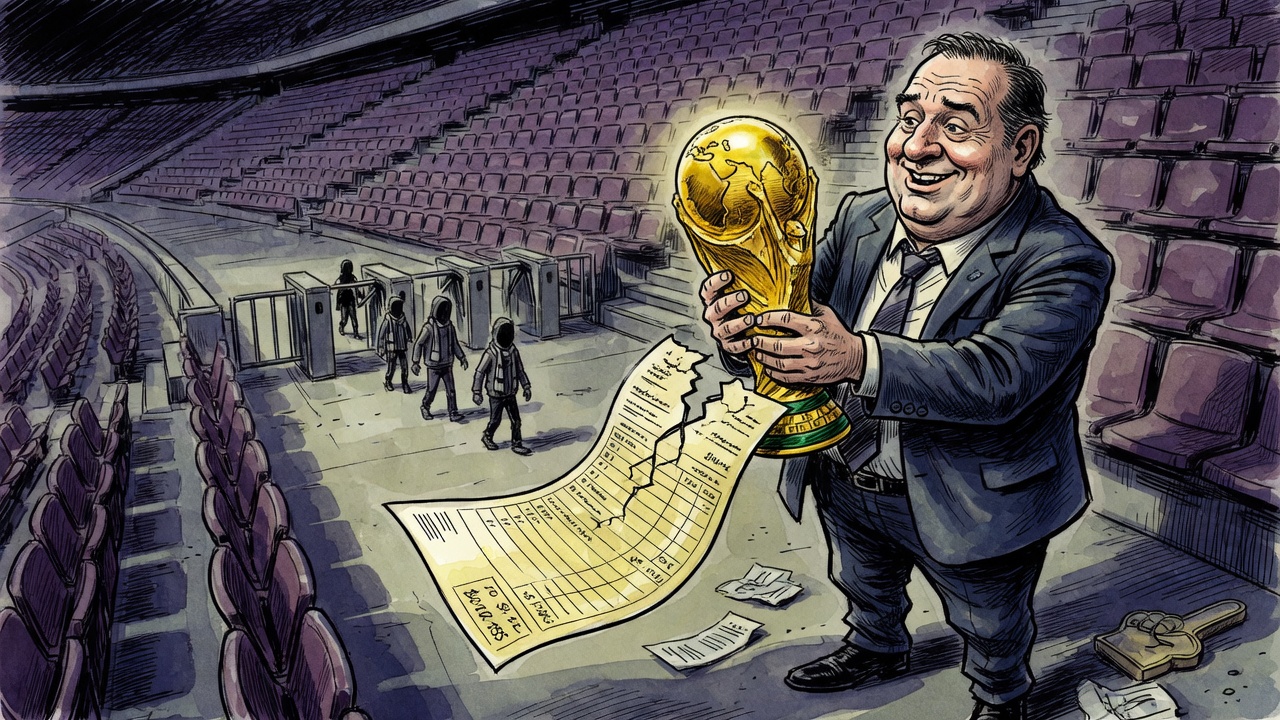
British Columbians were told the FIFA World Cup would be a once-in-a-generation economic showcase. Now the first visitor numbers are in, and they do not look like the windfall that taxpayers were asked to imagine.
Global News reported August 24 that Statistics Canada numbers showed the tournament brought visitors to Vancouver and Toronto, but the overall increase in international guests was relatively small. International arrivals to Canada were up 3.3% in June and 5.8% in July, for a combined increase of about 76,000 people. Arrivals from countries with teams playing in Canada were up by about 33,000.
Statistics Canada’s June release gives the cleanest official snapshot. Canada hosted 10 corrected World Cup matches in Toronto and Vancouver in June, with teams from 15 overseas countries playing here. Total arrivals from those 15 countries rose 28.6%, or 33,600, from June 2025. Panama, Australia and Germany accounted for just over two-thirds of that increase. That is a real bump. It is not, by itself, proof of a billion-dollar public payoff.
That distinction matters because the Province’s own May 29 update put the promise in very large terms. B.C. said seven Vancouver matches were forecast to draw approximately 350,000 spectators at BC Place, approximately one million additional out-of-province visitors during the tournament and the five years after it, approximately $1 billion in GDP, and more than $200 million in provincial tax revenues.
The same update also showed why the payoff has to be tested, not simply repeated. The Province said projected net provincial core and essential costs were reduced to a high of $114 million after offsetting revenues, but that calculation depends on hotel-tax revenue and federal contributions. Combined local and provincial safety and security costs were estimated at about $242 million. Global News separately reported B.C.’s updated gross core and essential World Cup costs at $685 million to $729 million, up from the previous $532 million to $624 million estimate.
None of this proves the tournament brought no benefit. It does prove that the public deserves a full, plain-English ledger: final public costs, offsets, hotel-tax revenue, policing and security costs, actual visitor spending, and how much of the benefit reached businesses outside the downtown event zone.
If the NDP wants credit for a billion-dollar promise, it should accept scrutiny when the first numbers look modest. A packed fan zone may make good television. Taxpayers need the receipts.
Sources and records
- Global News, Aug. 24, 2026: Canada sees small bump in international visitors during FIFA World Cup
- Statistics Canada: Travel between Canada and other countries, June 2026
- B.C. Government, May 29, 2026: updated FIFA World Cup cost and benefit estimates
- B.C. Government, June 29, 2026: FIFA midpoint benefits update
- Global News, May 29, 2026: FIFA World Cup now expected to cost B.C. between $685M and $729M