Tumbler Ridge Loses Its ER for the Weekend
For rural families, another staffing notice means another weekend when emergency care starts with an ambulance ride out of town.
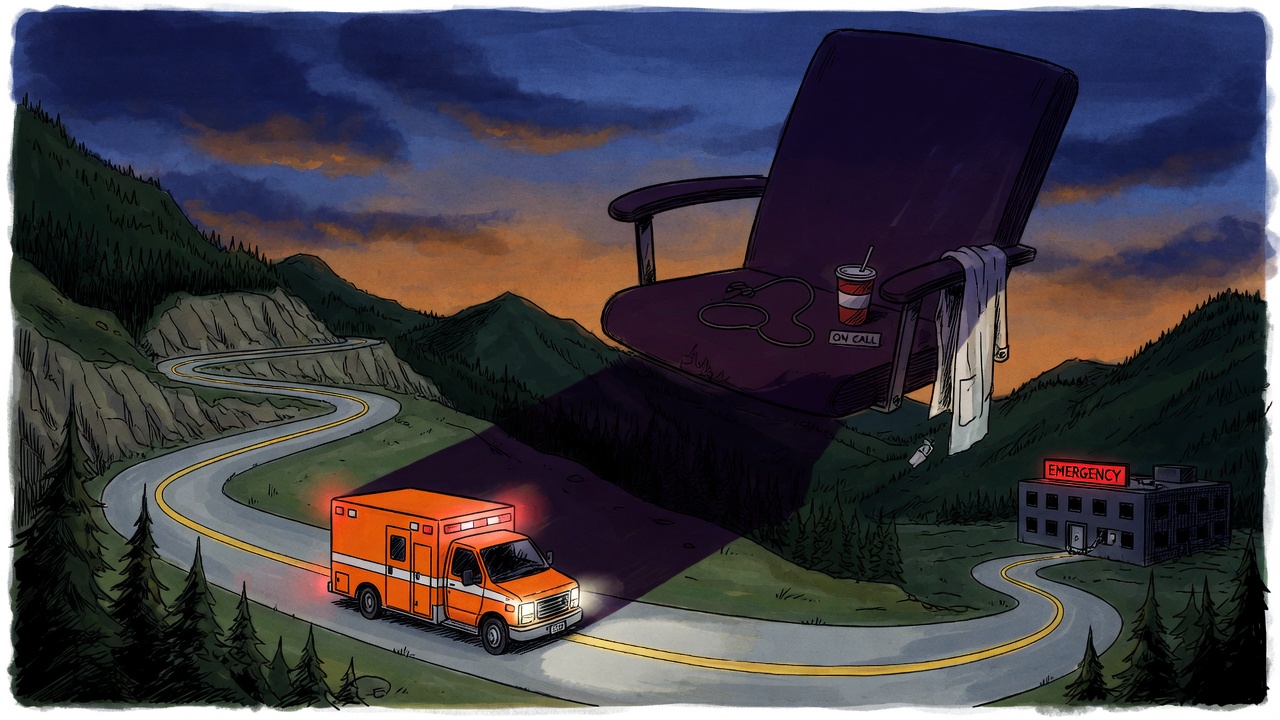
Tumbler Ridge has been handed another rural health-care warning. CJDC reported Friday night that the Tumbler Ridge Health Centre emergency department would remain on diversion through the weekend because of staffing shortages, leaving residents without local emergency department services for a third consecutive day.
The timing is blunt. According to CJDC, the latest closure began at 4 p.m. Friday, Aug. 28, and was expected to continue until 8 a.m. Monday, Aug. 31. It followed Wednesday and Thursday interruptions when emergency services were also unavailable from 4 p.m. to 8 p.m. That is not one awkward scheduling gap. It is a small community watching emergency coverage disappear across multiple days, then across an entire weekend.
Northern Health’s own emergency-department status page tells patients what happens when services are interrupted: people experiencing life-threatening emergencies such as chest pain, difficulty breathing or severe bleeding should call 911 for transport to the nearest available and appropriate facility. CJDC reported the same direction for Tumbler Ridge, along with signage at the hospital and notice to patient-transfer partners.
No responsible person should demand an emergency room operate without safe staffing. If the doctors, nurses and support staff are not there, health authorities have to make operational decisions that protect patients and workers. But that practical reality does not excuse the political failure. The provincial promise was not supposed to be a health-care system where rural residents repeatedly discover, after hours and on weekends, that their local ER is unavailable and the backup plan is a highway transfer.
Premier David Eby’s government often points to recruitment, training, new models of care and record health spending. Those claims have to be measured against the front door. In Tumbler Ridge, the front door did not offer local emergency department service through the weekend described by CJDC. For a parent with a sick child, a senior with chest pain, a worker injured on a remote road, or a family dealing with a crash, the difference between local emergency care and a longer transfer is not a communications problem. It is the system.
Rural B.C. needs more than temporary notices that come and go. It needs a public stabilization plan that names every affected community, counts every closure hour, explains the missing shifts, and sets measurable dates for reliable coverage. If Victoria can track health announcements, it can track emergency-room failures with the same precision.
Tumbler Ridge should not have to accept “call 911 and travel elsewhere” as the default weekend safety net. The NDP’s rural health-care test is not whether it can issue another staffing bulletin. The test is whether families can count on emergency care when the emergency actually arrives.