Eby’s “Built in B.C.” Promise Comes With Receipts
The point is not whether B.C. should use public projects to support local jobs. The point is why David Eby needs an election promise to start proving it.
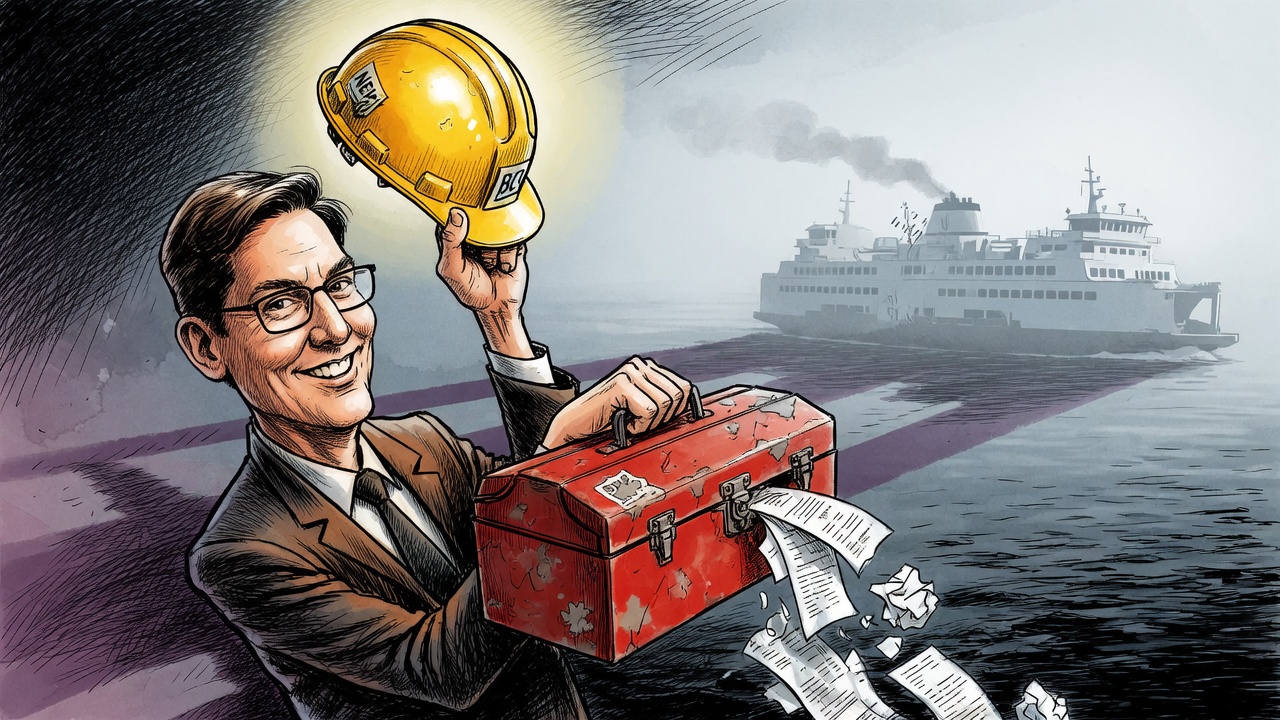
David Eby’s newest campaign promise sounds simple: use public construction to buy more B.C. and Canadian materials. On its face, that is not a radical idea. Taxpayer-funded schools, hospitals, transmission lines and transportation projects should build more than concrete and steel; they should build local capacity, skilled work and industrial resilience.
But Eby is not a new challenger discovering procurement from the outside. He is the premier asking voters to reward a governing record. That is why the timing matters.
The September 24 BC NDP release says Eby would bring in new “Built in B.C. and Canada” buying rules for public infrastructure. It says the policy would apply to ministries, Crown agencies and health authorities, and require domestic goods and materials where B.C. or Canadian suppliers can deliver at a competitive price and on time. The release also says the approach would immediately apply to the North Coast Transmission Line, with BC Hydro directed to build 70% of Phase 1 towers and 100% of Phase 2 towers with Canadian steel.
Those details are measurable. Good. Now apply the same measuring tape to the record voters already have.
BC Ferries’ official New Major Vessels page says the company selected China Merchant Shipbuilding Industry Group Co. Ltd. in June 2025 to build four new major vessels, after BC Ferry Commission procurement approval. BC Ferries has its own structure and procurement process, and no honest critique should pretend every ferry file is identical to a ministry tender. But it is still a public-service transportation system, tied to public affordability, public confidence and coastal jobs. When Eby now says B.C. must become its own best customer, voters are entitled to ask why that principle did not already dominate the biggest ferry-procurement debate in the province.
The procurement record has another receipt. BC Ballot records that Bill M 233, the Public Sector Construction Projects Procurement Act, was defeated at second reading on April 20, 2026 by a 42–48 vote. The bill text would have barred public-sector construction solicitations from making union-only or non-union-only labour a bid condition. That bill was not a “buy Canadian” bill. It was a procurement-fairness bill. But it belongs in the same accountability file because Eby is now campaigning on the idea that procurement rules decide who gets work.
So the hard question is not whether local buying is good politics. It is whether this promise will be a real rulebook or another campaign slogan. Which projects are covered? Which are exempt? Who decides whether a B.C. supplier is competitive and on time? Will exemptions be public? Will penalties for U.S.-made inputs be published project by project? Will the policy protect workers without turning procurement into another insider gate?
Eby has handed voters a useful standard. If public dollars should build B.C. jobs in September 2026, they should have been doing it before the writ dropped too.