Eby Is Recruiting Nurses. BCNU Says They Still Aren’t Safe at Work.
Recruitment matters. But if the workplace is unsafe, recruitment becomes a revolving door — and BCNU’s own campaigns say violence remains a frontline reality.
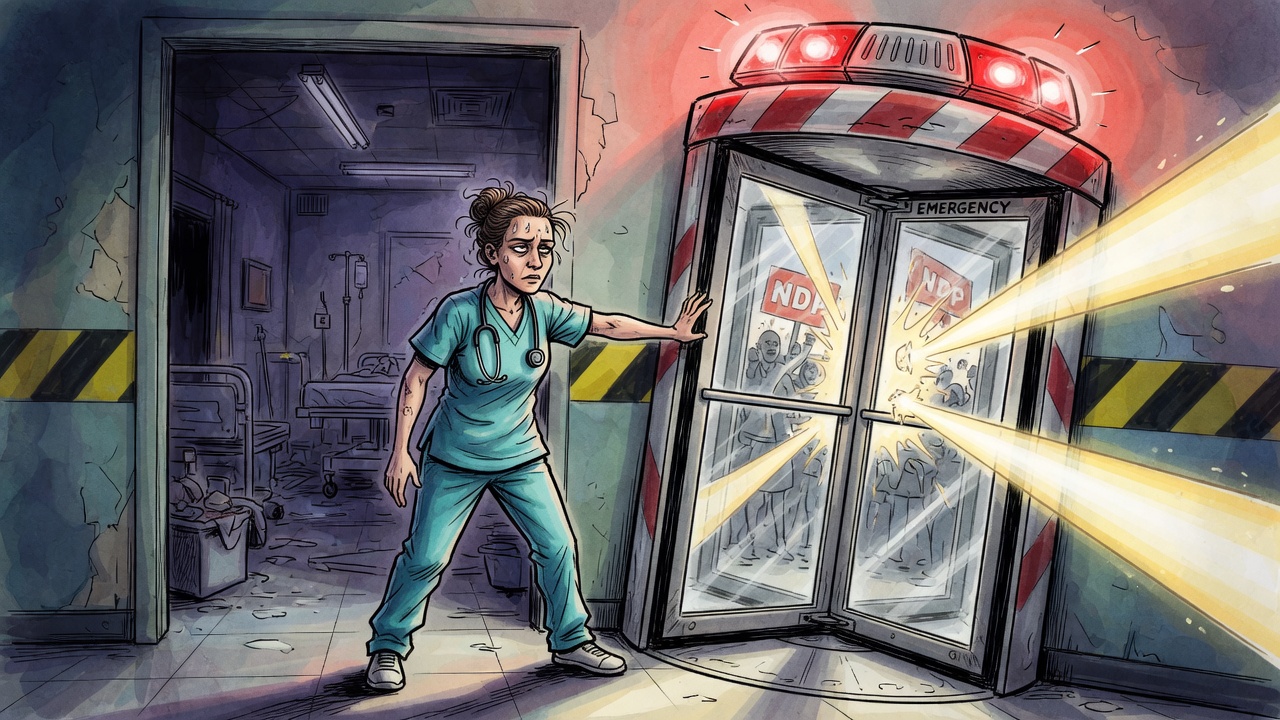
David Eby wants voters to see momentum in health care. On the first full day of the provincial campaign, Global News reported that he was in Surrey promising to “triple down” on targeted recruitment of U.S. health-care professionals, including doctors and nurses.
Fine. B.C. needs staff. But recruitment is not a substitute for retention, and retention is not credible if nurses are still being asked to absorb violence as part of the job.
The British Columbia Nurses’ Union is not describing a minor morale problem. In its “Violence. Still Not Part of the Job” campaign, BCNU says violence against nurses is continuing and intensifying amid chronic understaffing and rising patient acuity. That is the union’s claim, and it deserves to be treated as a direct workplace-safety warning from the people representing frontline nurses.
The numbers BCNU puts in public are blunt. The union says 50 per cent of nurses experience physical violence at least once a month. In a separate “Every 16 Hours” campaign, BCNU says nurses filed an average of 44 WorkSafeBC claims per month in 2025 — roughly one nurse injured on the job every 16 hours.
Those figures do not prove every incident is caused by a provincial policy choice. They do prove the campaign-trail story is incomplete. A government can recruit from American hospitals and still fail the basic test inside B.C. hospitals: can nurses work safely, with enough staff, security, support and consequences when violence occurs?
There is recent labour context too. BCNU says Nurses’ Bargaining Association members rejected a May tentative agreement by 67 per cent. A later July 24 BCNU release said members accepted mediator recommendations and ended province-wide job action, while also saying the recommendations addressed systemic issues including workplace violence and non-nursing duties.
That matters because Eby’s pitch is about attracting people into the system. BCNU’s warning is about what happens after they arrive.
British Columbians should not have to choose between compassion for patients and safety for nurses. The province can acknowledge high-acuity patients, mental-health pressures and overloaded emergency rooms without pretending violence is an unavoidable operating cost. Safe care requires safe staff.
So the campaign question is not whether recruitment is useful. It is whether the NDP can show measurable results on the conditions that make nurses stay: fewer assaults, fewer injury claims, fewer non-nursing duties pushed onto trained professionals, and enough staffing that danger is not normalized by exhaustion.
Eby can keep promising new recruits. The harder accountability test is whether B.C. can keep the nurses it already has.