Pacific Link Puts Eby’s Pipeline Double-Talk on the Ballot
Ottawa says B.C. was consulted before Pacific Link was listed as a national-interest pipeline. Eby should release B.C.’s position, conditions and consultation record now.
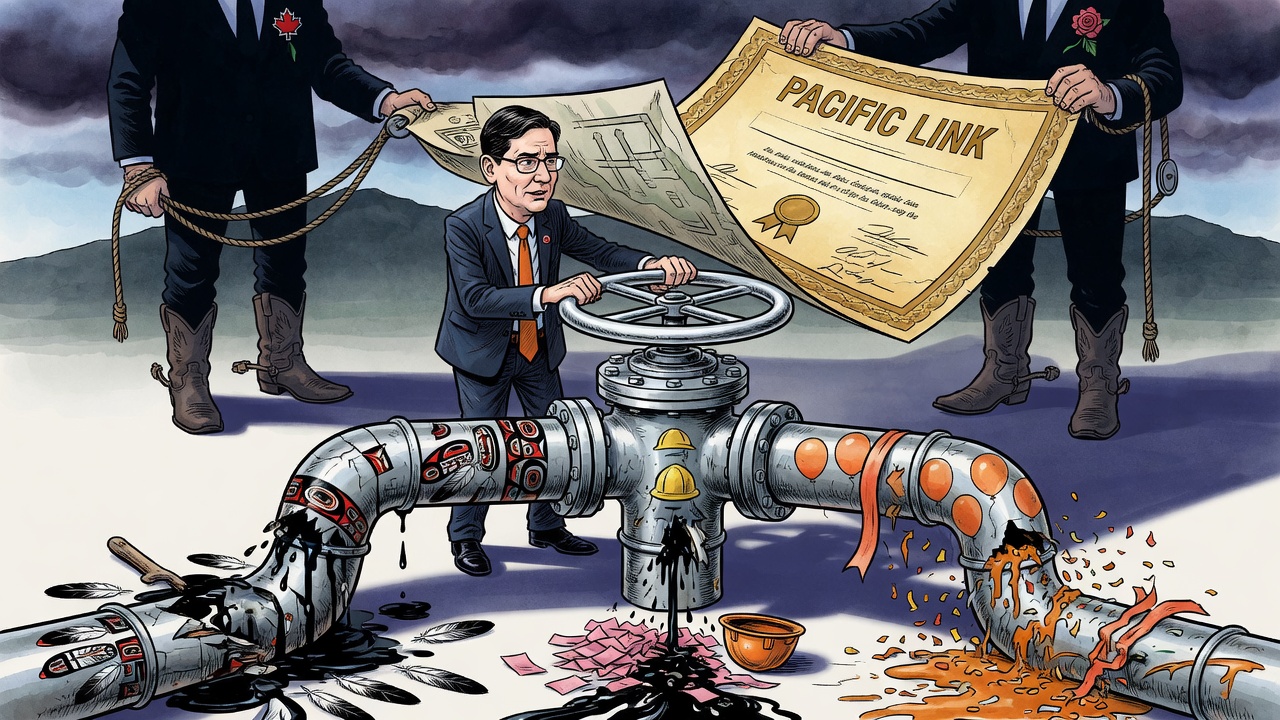
David Eby now has a pipeline problem that cannot be solved with campaign fog. Ottawa says Pacific Link is no longer just a proposal in the political ether. It has been listed as a project of national interest, and the Prime Minister’s Office says the Government of British Columbia was part of the consultation work before that listing.
The PMO release says the Major Projects Office consulted more than 130 Indigenous communities near or along potential Alberta and British Columbia routes, federal departments and the Government of British Columbia over the previous three months. That single sentence creates a direct accountability question for Eby: what did B.C. say?
Ottawa is putting large numbers on the table. The federal release says Canada and Alberta will share equal ownership, Indigenous communities will be offered at least a 10 per cent ownership interest financed through Indigenous loan guarantee programs, and the project is pitched as moving an additional one million barrels per day to Asian markets. It also claims 140,000 jobs, more than $20 billion in GDP per year, and $100 billion in government revenue by 2060.
Those are not small claims. They are exactly the kind of claims a provincial premier should test in public, especially when the pipe, tanker traffic, jobs, route questions and Indigenous-rights questions run through B.C.’s political bloodstream.
B.C.’s own Declaration Act page says the UN Declaration is the Province’s framework for reconciliation, and describes the law as aiming for better transparency and predictability. It also says the Province must develop and implement an action plan in consultation and co-operation with Indigenous Peoples and report regularly to the legislature.
That makes Pacific Link more than an energy file. It is a credibility test. If Eby wants to campaign as the defender of B.C.’s coast, climate goals and Indigenous-rights framework, he cannot also let Ottawa say B.C. was consulted while voters are left guessing what the province actually put on the record.
The responsible standard is simple. Release B.C.’s submissions to the Major Projects Office. Release the province’s conditions, red lines, route concerns, emergency-response requirements, benefit expectations and DRIPA analysis. If cabinet has a position, say it. If cabinet has no position, say that too.
Ottawa’s September 29 ocean-protection speech promised a southern corridor, continued North Coast tanker-ban protection, and new marine-safety spending as trade and shipping grow. Those are federal promises. B.C. voters still deserve B.C.’s assessment, in B.C.’s words, before they cast ballots.
Eby cannot be both the pipeline brake in campaign speeches and the quiet consulted partner in federal paperwork. Pacific Link is now on the ballot because Ottawa put B.C. in the process. The premier should put the province’s paper trail in front of voters.