Howe Sound Reprieve Is Not a Forestry Plan
A restart at Port Mellon is welcome for workers. It is also a warning about a forestry crisis still being managed one emergency at a time.
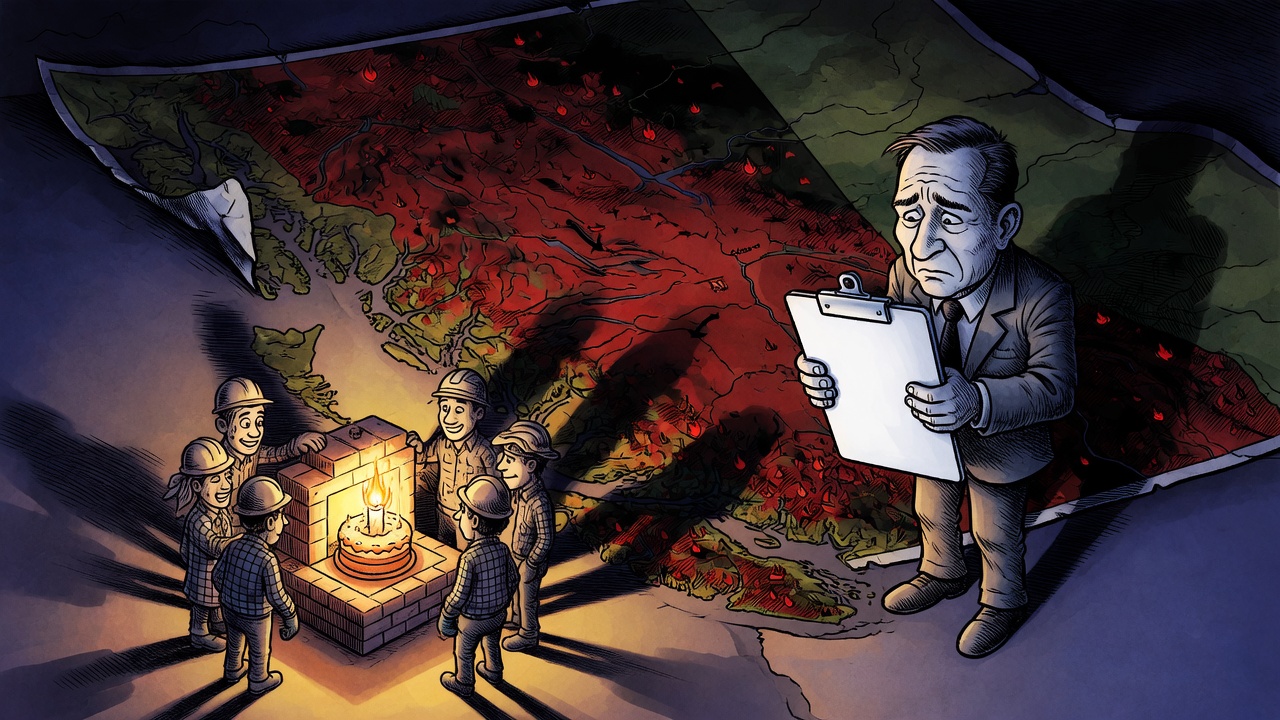
The reported restart of Howe Sound Pulp and Paper is a relief for workers and families on the Sunshine Coast. It should not be spun as proof that David Eby has a forestry plan.
Unifor said on October 1 that an agreement in principle between the provincial government and Domtar would help position the Port Mellon mill to re-open, pending ratification of a new collective agreement by Local 1119 members next week. The Canadian Press report carried by CKPG and CBC says the mill is poised to get back up and running later this month if members approve the deal.
That is real, welcome news after the August shutdown notice. Domtar had said the Howe Sound operation would be idled indefinitely because of lower demand, low prices and insufficient available fibre. The earlier announcement put roughly 400 direct jobs at risk and had the mill and adjoining Bayview Fibre chipping facility heading toward a full dark date in October.
But a reprieve is not the same thing as a durable industrial strategy. The Deep Dive reports the province brokered the deal after appointing Don Wright and Don Kayne as negotiators on September 4, and that Domtar was seeking steadier, cheaper fibre access, lighter regulatory costs and electricity-pricing treatment for its cogeneration plant. If those issues were important enough to reopen one site, voters and mill towns deserve to know which terms changed and whether similar barriers are still hitting other employers.
Unifor’s own statement makes the point. National president Lana Payne called the Howe Sound breakthrough terrific news, but Western regional director Gavin McGarrigle warned that the sector remains in crisis and that coordinated effort is still needed to protect jobs. Unifor also pointed to more than 240 members at Canfor’s Northwood pulp mill who are poised to lose work when that Prince George closure proceeds this fall.
That is the ledger Eby cannot avoid. Howe Sound follows the original 400-job alarm covered here in August. It also sits beside the permanent Domtar Crofton closure, the Northwood closure, and repeated sector warnings about fibre, costs and competitiveness. No responsible critic should deny that global pulp prices and demand matter. They do. But provincial policy also matters when companies cite available fibre, energy costs, regulatory costs and competitiveness as survival issues.
So the government should answer plainly: what support was offered, what obligations Domtar accepted, how long the jobs are protected, what happens if pulp prices do not recover, and when B.C. will release a public fibre-and-competitiveness plan that applies before the next emergency.
Workers can celebrate the restart. Voters can still demand the missing plan.
Sources and records
- Unifor: agreement in principle and Howe Sound mill support
- Canadian Press via CKPG: Howe Sound mill to reopen if agreement ratified
- CBC / Canadian Press: union says deal reached to reopen Howe Sound mill
- The Deep Dive: province-brokered restart and unresolved forestry pressures
- Tree Frog Forestry News: Western Canada forestry roundup
- iVoteNDP archive: August 20 Howe Sound shutdown warning