Eby Froze a Food-Security Fix While Ottawa Put Money on the Table
B.C. was already working on ALR food-processing reform. Then David Eby called an early election, and Ottawa opened the food-infrastructure window.
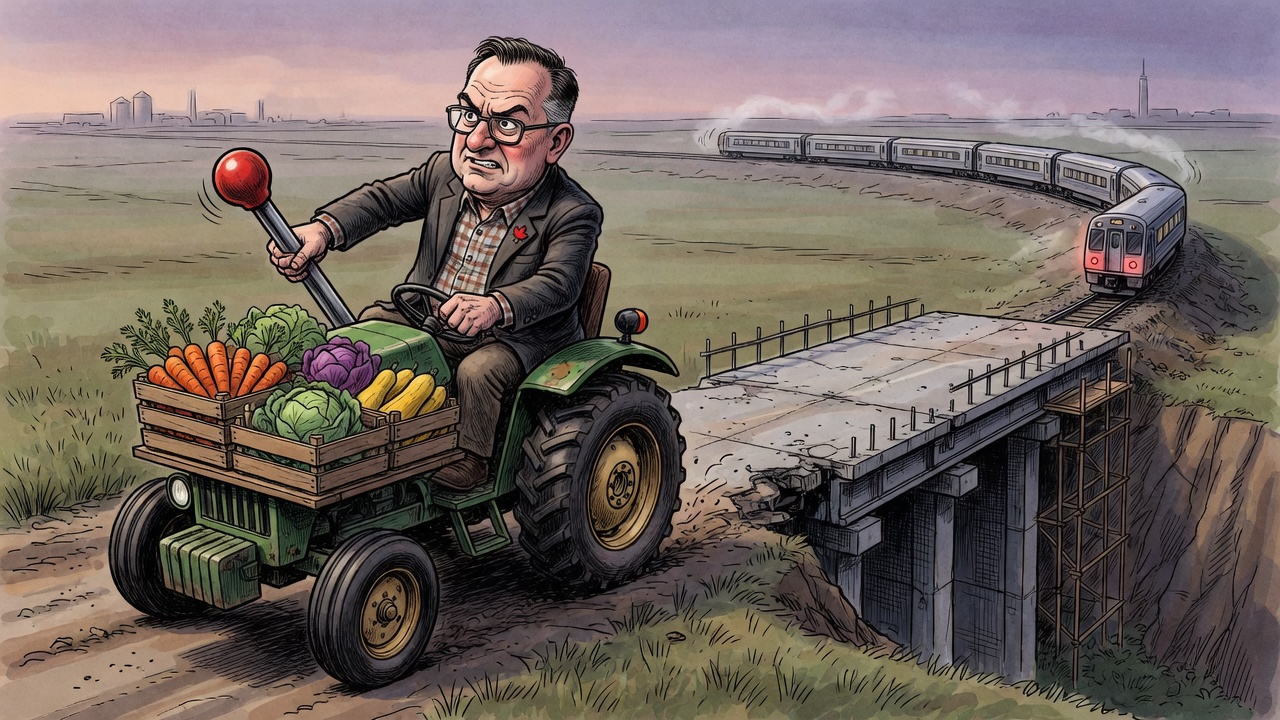
David Eby says grocery affordability and food security matter. Then his election call froze one of the province’s most practical food-security files at exactly the wrong moment.
In July, the B.C. government launched engagement on a proposal to expand food-processing opportunities in the Agricultural Land Reserve. The official pitch was not to pave over prime farmland. It was to allow more processing on lower-capability ALR land, while keeping protections for the best farmland. Northern Beat reported the plan would ease the controversial 50-50 rule by reducing the local-product requirement to five per cent from any B.C. farm on class five, six and seven lands, with the 50-50 rule remaining for the most productive class one through four land.
That is why this delay matters. Food processing is not a side issue. It is the missing link between farmers, local jobs, independent grocers and cheaper supply chains. B.C. can grow food, but if rules block aggregation, processing, cold storage and packaging, more value leaves the province and consumers keep paying for fragile supply chains.
Now compare the timing. Northern Beat’s October 8 column says the government was wrapping up extended consultation when Eby called the early election, leaving the file mid-stream. Eby’s answer, as reported, was that farmers had asked for more engagement and that it would conclude in October before any changes could be made. That may be his explanation. It is not a timeline British Columbians can bank on unless he gives dates, cabinet steps and a restart plan.
Meanwhile Ottawa has moved. Agriculture and Agri-Food Canada says the Food-Link Fund was launched October 5 and will provide $1 billion over ten years for food terminals and food hubs. Its program page says applications run from October 14 to December 11, with an expression-of-interest process that can close early if funding is fully committed or otherwise announced. The federal release says eligible projects can include cold storage, transportation, food processing and packaging, digital systems and facility upgrades.
No one should claim, without proof, that B.C. has already lost federal dollars. But voters should not accept hand-waving either. If provincial rules are still unsettled while federal intake opens, B.C. farmers, processors, municipalities and investors need to know whether the election has put them behind competitors in other provinces.
The NDP cannot campaign on affordability, local food and tariff resilience while treating implementation delays as a footnote. Eby chose the election date. He owns the pause. The answer should be simple: name the date consultation ends, name the first day cabinet can approve the ALR change, explain whether applicants can proceed under current rules, and disclose what B.C. is doing to make sure federal food-infrastructure money does not roll past this province.
If the government really was “meeting the moment” in July, Eby should explain why British Columbians are still waiting in October.
Sources and records
- B.C. government: engagement on food-processing opportunities in the ALR
- Northern Beat: food production changes on farmland and the 50-50 rule
- Northern Beat: election delay and food-production changes
- Agriculture and Agri-Food Canada: Food-Link Fund program page
- Government of Canada: Food-Link Fund release
- Prime Minister of Canada: National Food Security Strategy