Eby’s Ferry Pilot Is Rationing, Not a Capacity Fix
The locals-first ferry promise may help some residents get a booking. It also admits the system does not have enough certainty for the people who depend on it.
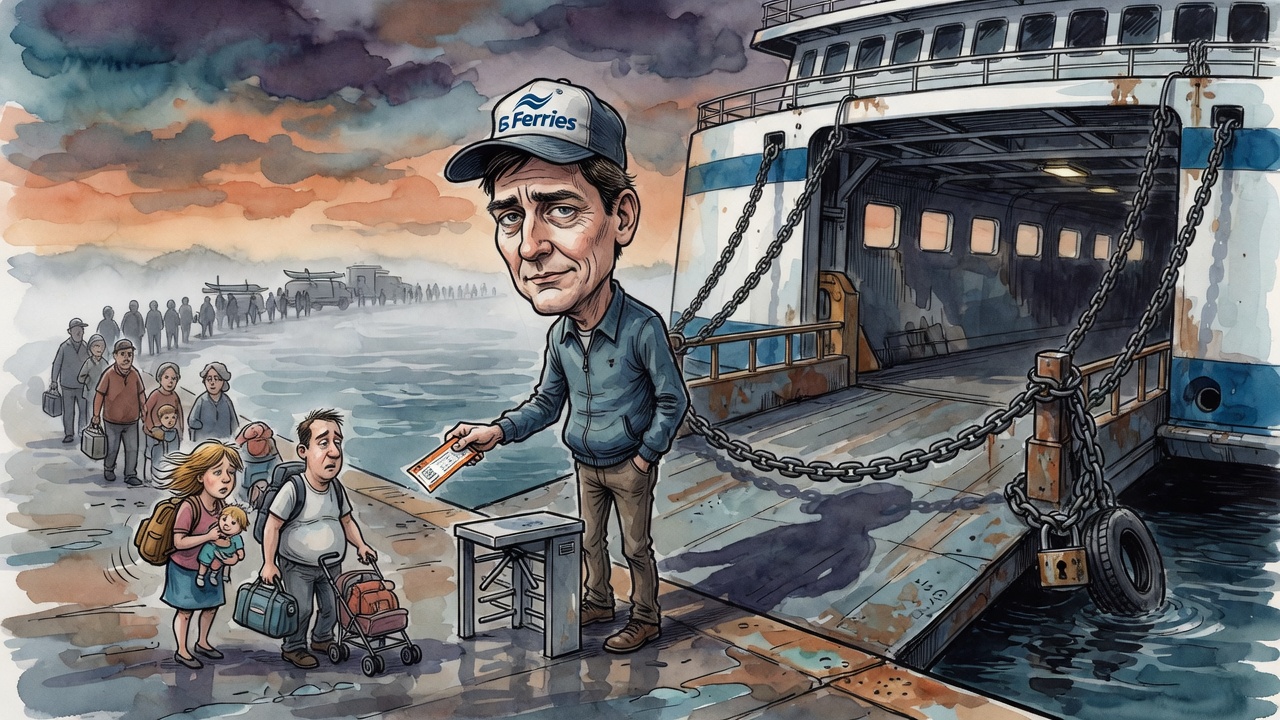
David Eby’s latest ferry promise is being sold as a locals-first pilot. The details show something more revealing: the NDP is proposing to reserve a small slice of scarce booking space because coastal residents cannot count on the system they rely on.
The party announced the pilot in Powell River on October 10 with candidate Randene Neill. It says ferries are critical infrastructure for coastal communities — used for medical appointments, family visits and daily life — and says demand has risen as more people travel closer to home. That framing is important. This is not a luxury-tourism question for residents of ferry-dependent communities. It is access to basic movement.
Under the NDP plan, 12% of advance booking space would be held for local residents on two routes: Horseshoe Bay to Langdale, and Westview in Powell River to Little River in Comox. Ten per cent would be held until four days before sailing, with another 2% held until 24 hours before departure. The Canadian Press also reported the same route and percentage details in its campaign roundup.
If you live on the Sunshine Coast or in Powell River, that may be useful on a bad travel week. But the political claim should not be allowed to outrun the operational fact. A reservation set-aside does not create a new vessel. It does not add crew. It does not reduce the fare pressure families and businesses face. It simply decides who gets first claim on a limited pool of bookings.
BC Ferries’ own public material underlines why that matters. The corporation describes the ferry network as one of the largest and most complex in the world, carrying passengers, vehicles and commercial traffic on routes that function as lifelines for island and coastal communities. Its 2024-25 performance and sustainability reporting also warned that, without a sustainable long-term funding model, future system pressure could push fare increases well above 30% beginning in 2028.
That is the larger ledger Eby’s announcement does not settle. Coastal residents need reliability before the appointment is missed, before the shift is blown, before a contractor loses a day, before a family trip becomes a terminal gamble. A local priority lane can soften one symptom for some travellers. It does not answer the capacity, fleet, staffing, affordability or funding questions that made the priority lane politically necessary.
The government can call the pilot practical. Voters can still call it an admission. When a premier has to campaign on dividing up reservation space more carefully, he is acknowledging that the service is not providing enough certainty in the first place.
For ferry-dependent communities, the accountability test is straightforward: show the long-term plan that adds reliable capacity and keeps fares under control. Until then, the locals-first pilot is not a fix. It is a receipt for the shortage.