Island Health’s Weekend Help-Wanted Board Is the Health-Care Receipt
The government can campaign on health-care progress. Island Health’s own urgent-shift page shows emergency, inpatient and internal-medicine gaps still being filled shift by shift.
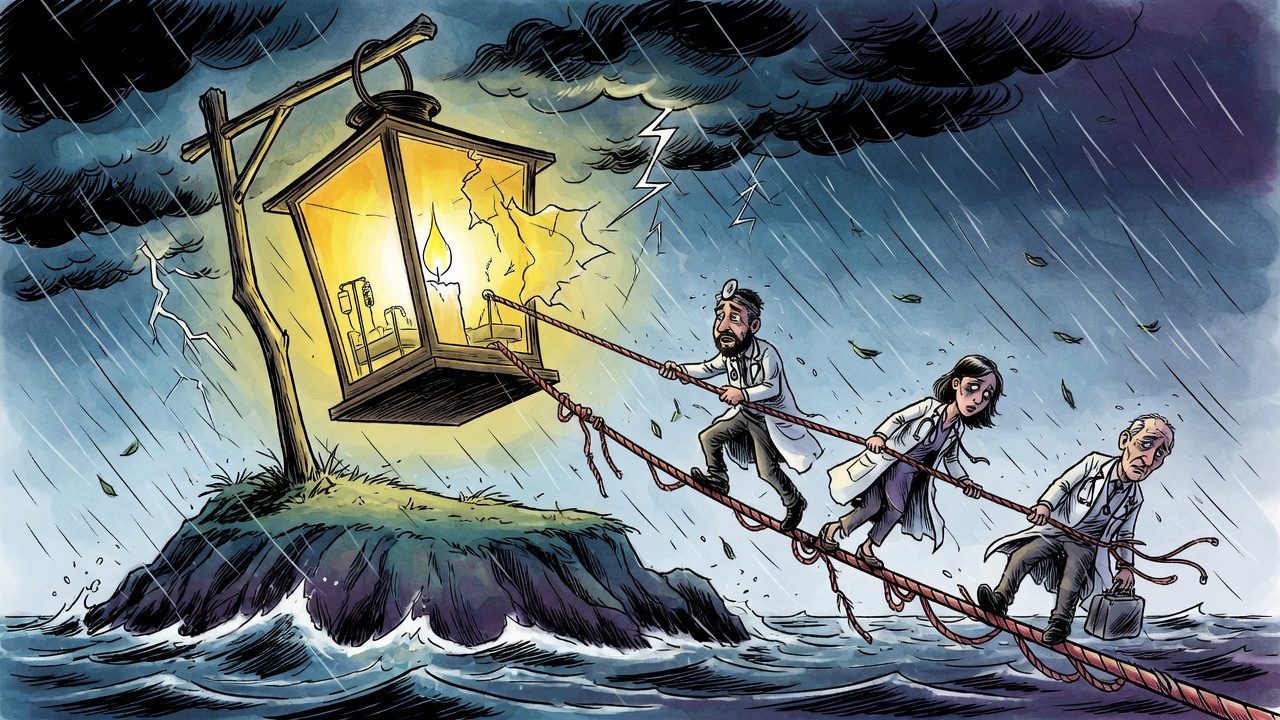
David Eby’s campaign wants voters to hear that B.C. health care is moving in the right direction. Island Health’s own weekend staffing board tells a harder story: hospitals are still relying on urgent calls for physicians to keep critical coverage together.
As of Saturday, September 26, Island Health’s Medical Staff page said the health authority and colleagues were requesting support with “upcoming emergency department, inpatient care, and general internal medicine shift coverage” across Vancouver Island sites. It directed physicians to contact medical staff human resources and added that, in most cases, privileging can be expedited as required.
That is the receipt voters should examine. Expedited privileging is not a routine victory lap. It is a sign that the system needs qualified people quickly enough to move paperwork faster than normal. The page also points to travel and accommodation support for urgent gaps, along with hourly rates and travel honoraria for the Nanaimo work.
The listings are specific. West Coast General Hospital was shown with a September 26 overnight coverage need from 2200 to 0800, plus October 3, October 6 and October 13 shifts. Port Hardy Hospital was listed for a 24-hour October 19 coverage need from 0700 to 0700. Nanaimo Regional General Hospital’s AMS Bridge listed September 25, 28 and 29 on-call coverage and September 26 daytime coverage.
The Nanaimo description is especially blunt. Island Health says AMS Bridge physicians manage acute inpatient care for patients admitted through the emergency room while they await admission to internal medicine or hospitalist services. It says filling this “critical coverage gap” directly drives improvements in hospital census capacity and patient mortality.
No one should pretend that every open shift means a closure is inevitable. It does not. But voters also should not accept campaign language that treats staffing pressure as yesterday’s problem while the health authority is publicly seeking emergency, inpatient and internal-medicine help for this very weekend.
The political accountability belongs at the top. Front-line physicians, nurses, allied staff and administrators are trying to patch the schedule. The government asking for another mandate has to answer why Vancouver Island hospitals are still advertised through urgent coverage calls after years of health-care announcements.
A serious health-care plan would show the public more than recruitment slogans. It would publish the unfilled-shift ledger by site, the number of patients waiting in emergency departments for internal medicine or hospitalist beds, the communities needing travel-supported stopgaps, and the dates when stable staffing is expected. If the NDP wants credit for fixing health care, its own health authority has just shown the test: the schedule, not the slogan.