The DULF Ruling Puts Eby’s Safe-Supply Ledger Back on the Ballot
The court ruling is federal law. The accountability question is provincial oversight: what did the NDP fund, what did it know, and why did it retreat only after backlash?
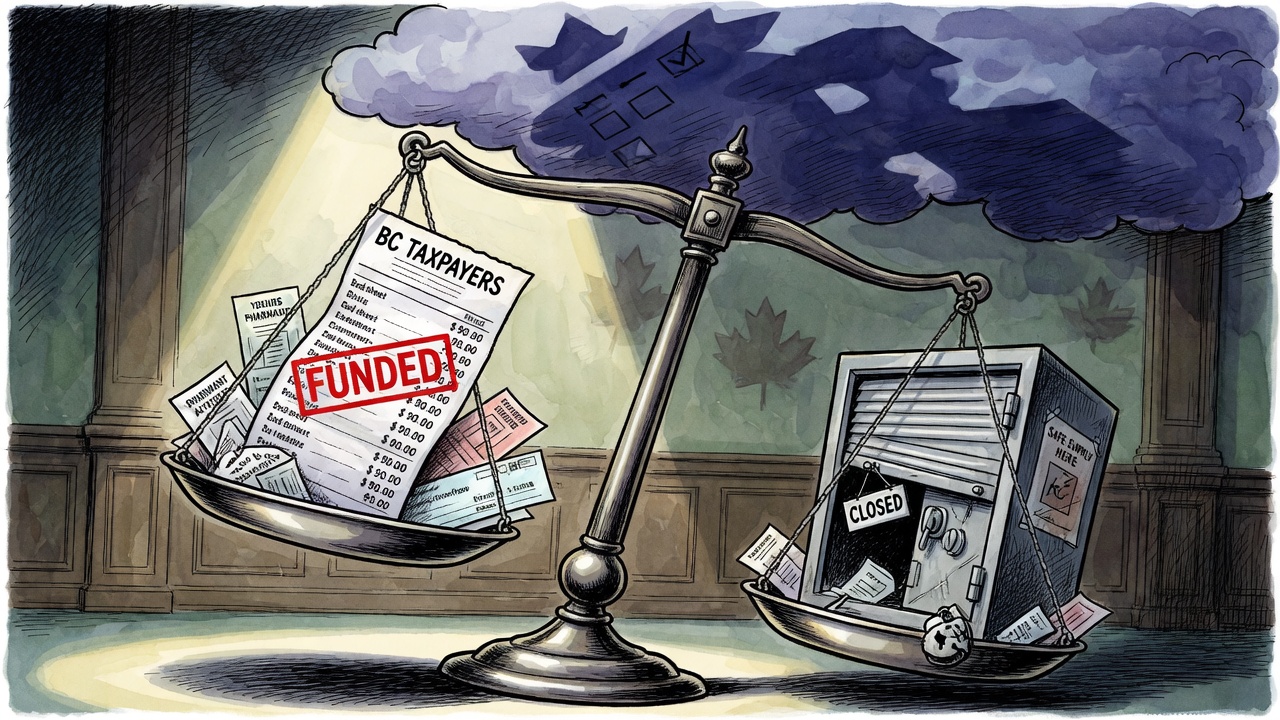
BC Supreme Court Justice Catherine Murray has stayed the convictions of Drug User Liberation Front co-founders Jeremy Kalicum and Eris Nyx and declared section 5(2) of the federal Controlled Drugs and Substances Act of no force or effect, with the declaration suspended for six months. That ruling belongs to the courts and Parliament. The political ledger belongs to British Columbia voters.
The provincial issue is not whether Victoria controls the federal trafficking law. It does not. The issue is that DULF operated in Vancouver’s Downtown Eastside with public-health authorities watching, supporting parts of the work, and then pulling back when the political heat arrived.
The judgment records that Vancouver Coastal Health entered into a Community Health Services Agreement with DULF on December 1, 2022, providing up to $200,000 in annual funding for drug checking and overdose prevention services. It also records the important caveat: the court noted that this funding supported the overdose-prevention site and drug-checking services, while Kalicum and Nyx said drugs were bought with donations from concerned community members, not government funds.
That distinction matters legally. It does not erase the oversight question. A health authority funded and worked around a project that was openly sourcing, testing and distributing heroin, cocaine and methamphetamine through a compassion-club model. The court found DULF operated openly, kept officials updated, had substances tested at UBC and UVic, and was the subject of peer-reviewed study.
Then came the backlash. The ruling says that after public outcry, the B.C. Ministry of Health directed Vancouver Coastal Health to terminate DULF’s funding and the lease of the site, effective October 31, 2023. Police then investigated, and the storefront remained closed.
That sequence should bother voters on every side of the drug-policy debate. If the model was defensible, why did the NDP government not build a clear legal and public-accountability framework around it before the crisis point? If it was not defensible, why was a health authority funding adjacent services and tolerating the operation until national attention made the politics unbearable?
Justice Murray’s findings are sweeping: she wrote that non-medicalized safer supply is urgently needed to save lives, that the DULF Compassion Club reduced harms and did not negatively affect community or public safety, and that there was no practical legal pathway for such a program. Others will argue the federal Crown should appeal, and Parliament may respond. Those are serious debates.
But David Eby cannot hide behind jurisdiction. His government’s health apparatus was in the story before the charges, before the shutdown and before this ruling. Voters deserve the documents: who approved the funding, what risks were flagged, what ministers were told, what public-safety conditions existed, and why the government changed course only after the controversy became impossible to ignore. Harm reduction without accountability is not compassion. It is government by experiment, retreat and courtroom cleanup.