Eby’s Debt Trap Is Now a Services Problem
The province’s own books show the debt-service meter moving from an accounting issue to a frontline-services issue.
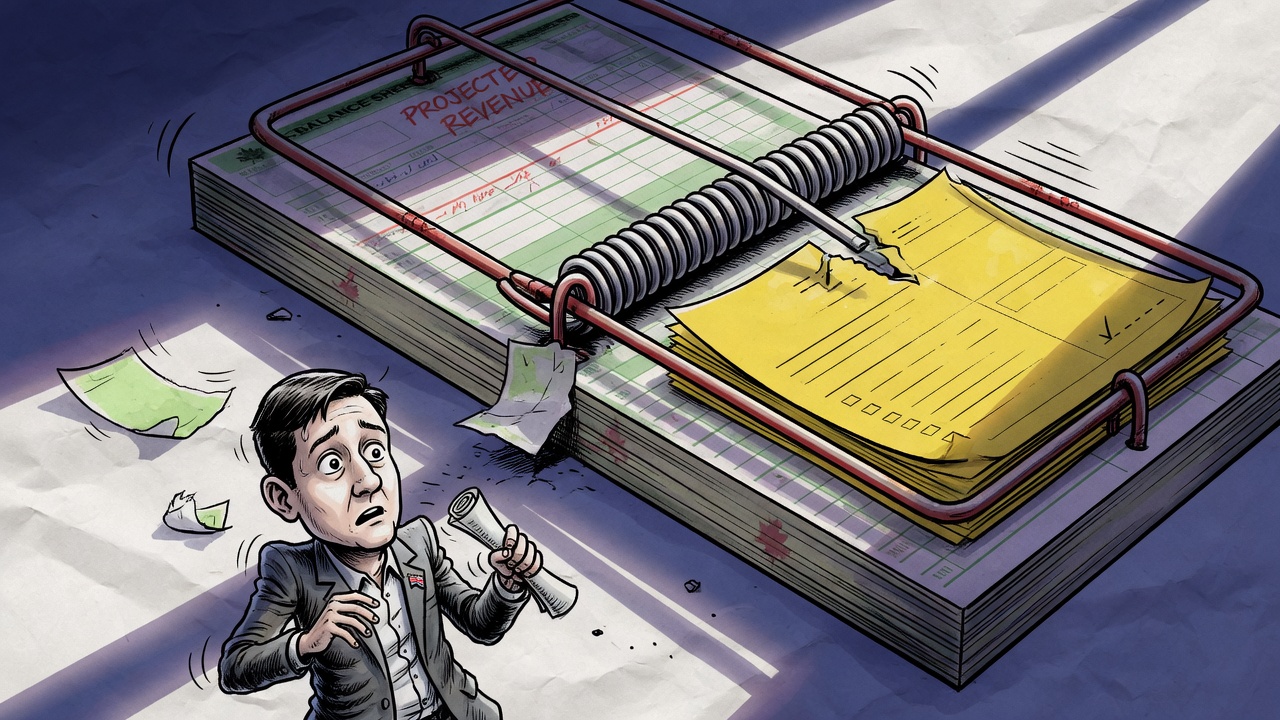
B.C.’s election campaign now has a hard fiscal ledger. The province’s First Quarterly Report forecasts a $13.8-billion deficit for 2026-27, $450 million higher than the figure in Budget 2026. The government points to wildfire costs, refundable tax credits and weaker natural-gas royalties. Those are real line items. They do not erase the bottom line: the shortfall got larger after the budget was tabled.
The outer years are not a return to balance. CityNews, reporting on the same update, noted projected deficits of $12.7 billion in 2027-28 and $12.0 billion in 2028-29. It also reported that the 2026 real-GDP growth forecast was cut to 0.9%, down from the 1.3% assumed in Budget 2026. That matters because weak growth makes every promise harder to finance.
The budget documents are even more blunt on debt. Budget 2026 forecasts taxpayer-supported debt rising to $189.0 billion by 2028-29. The taxpayer-supported debt-to-GDP ratio is shown climbing from 30.6% in 2026-27 to 34.4% in 2027-28 and 37.4% in 2028-29. The province still argues B.C. remains affordable compared with other jurisdictions, but the trend is the story voters need to see.
The most politically dangerous number is the “interest bite.” Budget 2026 shows taxpayer-supported interest costs rising from 4.9 cents per dollar of revenue in 2025-26 to 8.2 cents by 2028-29. Interest is not a hospital shift, a school classroom, a housing start or a sheriff in a courthouse. It is the price of past decisions arriving before future services get funded.
The Business Council of B.C. response called the trajectory unsustainable without a path to stabilize the province’s finances. Voters do not have to accept every business-lobby recommendation to recognize the warning. When debt-service costs grow, they compete with the same services the NDP says it is protecting.
That is why “tax the rich” rhetoric is not a fiscal plan. The official documents already show higher revenue alongside a larger deficit. The question is spending discipline, economic growth and a credible path that stops interest from eating the room. Voters should not be asked to choose between compassion and arithmetic; public services collapse when governments pretend the arithmetic is optional. If Eby wants another mandate, he should release the service-by-service debt ledger: what is protected, what is delayed, what is borrowed, and what future taxpayers will pay for today’s promises.