Port Hardy’s Two-Morning ER Closure Is the Rural Health Receipt
Island Health’s own notices show Port Hardy Hospital’s emergency department closed on two consecutive mornings because of limited care-provider availability.
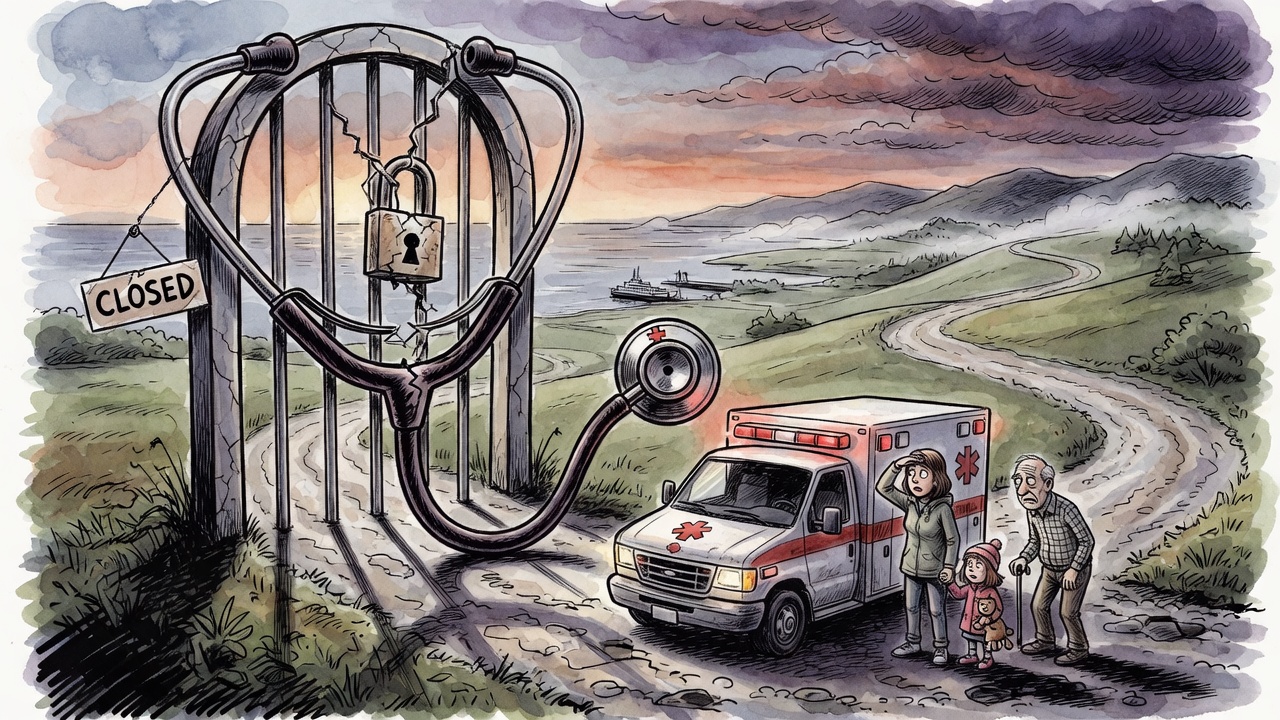
David Eby can campaign on health-care progress. Port Hardy just handed voters the receipt.
On October 10, Island Health said Port Hardy Hospital’s emergency department would be closed from 7 a.m. to 1 p.m. on October 11 because of “temporary limited care provider availability.” On October 11, Island Health issued the same kind of notice again: the ER would be closed from 7 a.m. to 11 a.m. on October 12. Two mornings. Same hospital. Same reason.
That does not mean anyone should blame the clinicians who are still showing up. It does mean the system has failed a basic rural test when the official instruction during an emergency-department closure is to call 911 or, if possible, proceed to Port McNeill Hospital. Island Health also told people not to go to the closed ED during those hours because doing so would delay access to care.
The hospital’s own location page carried the same warning on October 11: emergency temporarily closed on October 12 due to limited staffing, with emergencies directed to 911 or Port McNeill Hospital if possible. That is not opposition spin. It is the health authority’s public notice.
The broader staffing ledger is visible in the same system. Island Health’s urgent-shift page says colleagues are being asked to help cover emergency department, inpatient care and general internal medicine shifts across Vancouver Island sites. As of the page checked for this story, it listed West Coast General Hospital for October 13 and Port Hardy Hospital for a 24-hour October 19 shift.
BCNU adds the frontline context. In its election material and October release, the nurses’ union says staffing shortages are putting B.C.’s health-care system under immense strain and calls for implementation of nurse-to-patient ratios, retention and recruitment, reduced reliance on private agency nursing, and action on workplace violence. Those are BCNU’s claims and demands; they should be weighed as union advocacy, not treated as a government audit. But they match what rural residents are seeing when emergency doors are temporarily locked.
The accountability question for Eby is not whether a news release can explain away a four-hour or six-hour interruption. It is whether his government can guarantee reliable emergency access outside the Lower Mainland. Rural families do not experience a closure as a talking point. They experience it as a longer drive, a 911 call, and a warning not to walk through the nearest emergency door.
Before election day, every candidate should be asked for the hard numbers: how many rural ER interruptions this year, how many were staffing-related, how many urgent shifts remain uncovered, and what date voters can expect that ledger to improve. Without that table, the campaign promise is just another sign on a closed door.