The Room Told Eby B.C. Is Going the Wrong Way
A business audience put hard numbers on B.C.’s economic anxiety. David Eby answered with another build-it-here pitch and a promise to cost the platform later.
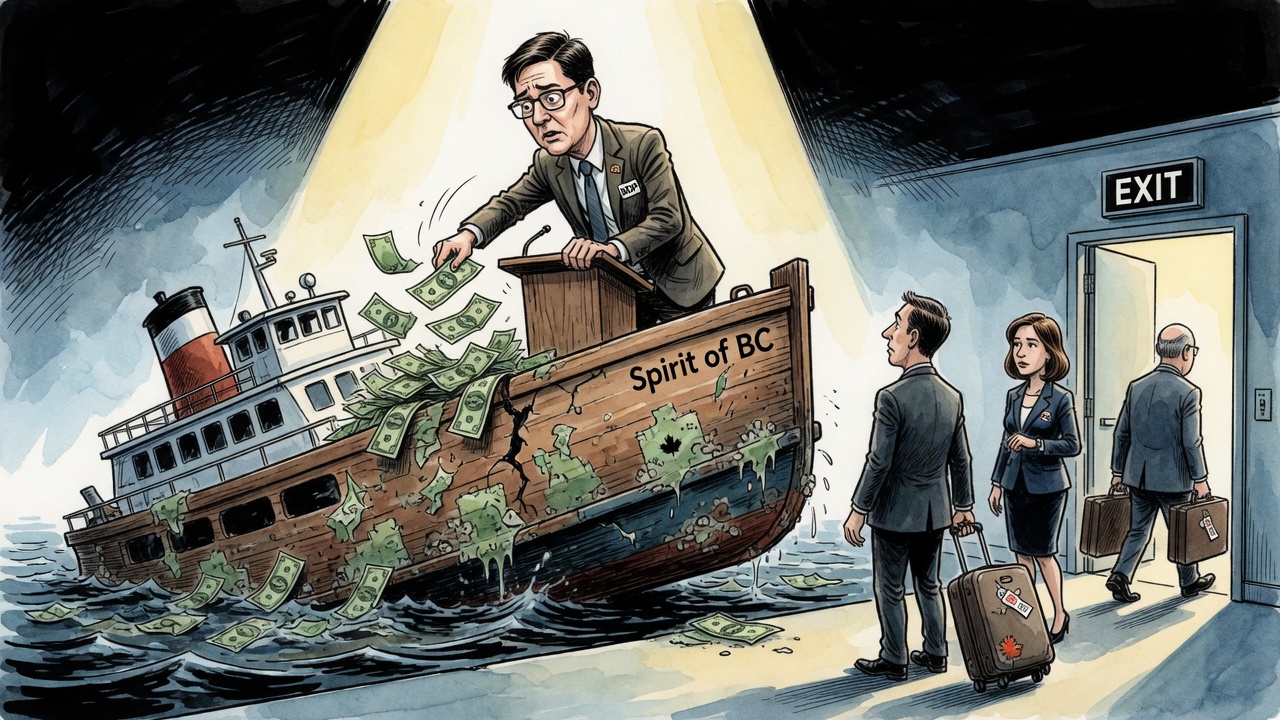
David Eby walked into Tuesday’s Greater Vancouver Board of Trade event with a campaign promise. The room answered with a confidence audit. Canadian Press reporting from the Vancouver event says board president Bridgitte Anderson opened by releasing member-survey results: 78 per cent of respondents said B.C.’s economy is heading in the wrong direction, while 74 per cent expressed concern about the provincial deficit, forecast at $13.8 billion.
That is not partisan spin. It is a business audience telling all three party leaders what the private-sector ledger looks like from the ground: uncertainty, rising costs, weak confidence and fear that government debt is no longer an abstract budget-table problem.
Eby’s answer was to lean into “build.” He said an NDP government would work with Ottawa on a new shipyard so ferries and other vessels could be built in British Columbia. He also argued that changing government would create uncertainty around projects he valued at $130 billion. The political message was familiar: only the NDP can protect services and keep projects moving.
But the same Canadian Press account reported that Eby, when asked about the deficit, said his party would release a fully costed platform and reduce the deficit over time, without giving an exact timeline. That is the accountability gap. Voters are being asked to accept another industrial promise before seeing the arithmetic that would pay for it.
The business warning was broader than one shipyard speech. Conservative interim leader Lorne Doerkson cited the board’s numbers and said more than 30 per cent of board members reported their businesses had considered moving outside British Columbia. Eby can dispute his opponents’ cures. He cannot dismiss the fact that the room he was addressing was worried about the direction of the province.
This is where the NDP’s campaign frame collides with its governing record. If the province’s answer to a confidence problem is another promise fund, another procurement pledge and a deficit plan still waiting for exact dates, the risk is obvious: announcements become a substitute for a measurable turnaround.
B.C. does need ships, ports, housing, power and industrial capacity. It also needs a government that can show which dollars are committed, which projects are real, which approvals will move, and when the deficit path bends. The Board of Trade event put that test in plain view. Eby did not face a hostile rally. He faced the people who hire, invest, build and pay the tax base that funds public services. Their message was blunt: the current course is not convincing them.
Sources and records
- Canadian Press via Yahoo Finance: B.C. leaders offer competing economic ideas in front of business leaders
- Canadian Press via Castanet: leaders scheduled for Greater Vancouver Board of Trade event
- Greater Vancouver Board of Trade: Budget 2026 response
- CityNews / Canadian Press: B.C. government forecasting larger deficits